Taking a mock driving test UK learners often overlook is one of the most powerful steps you can take on your journey to getting that full licence. Yet surprisingly, many learners skip it entirely and it shows on test day.
If you’ve been practising your manoeuvres, clocking up lesson hours, and feeling reasonably confident behind the wheel, you might wonder why a mock test matters. The truth is, knowing how to drive and knowing how to pass a driving test are two very different things. A mock test bridges that gap.
What Is a Mock Driving Test?
A mock driving test is a full practice run of your official DVSA driving test, conducted by your instructor under real test conditions. It typically lasts around 40 minutes and follows the same format a show-me tell-me question, around 20 minutes of independent driving, a variety of road types, and all the standard manoeuvres you’d expect on the day.
The key word here is conditions. It’s not just another lesson where your instructor chips in with tips every few minutes. During a mock test, they observe quietly, score you against the official marking sheet, and debrief you thoroughly at the end.
Think of it as a dress rehearsal but one where the feedback you receive is worth its weight in gold.
Also Read: Roundabouts in Bolton for Learners | Key Junctions to Practise Before Your Test
Why Mock Tests Are So Effective
From experience, many learners reach a plateau in their lessons. They drive well when their instructor is guiding them, but the moment the running commentary stops, their confidence drops. Mock tests expose this gap early before it costs you a test fee.
Here’s what makes them so valuable:
They replicate the real pressure. The nerves you feel during a mock test are genuine. Your palms sweat. You second-guess that roundabout exit. You hesitate at a filter lane. That pressure is exactly what you need to experience beforehand, so it doesn’t knock you sideways on test day.
They reveal your actual weak spots. In regular lessons, instructors naturally steer conversations toward areas of improvement. However, during a mock test, your faults are recorded without intervention. You might discover you’re consistently drifting wide on left turns, or that you forget to check your left mirror before pulling in habits you didn’t even know you had.
They build familiarity with the format. Many learners fail not because they can’t drive, but because they don’t fully understand what the examiner is watching for at each moment. A mock test makes the format feel familiar and removes much of the unknown.
What Examiners Are Actually Looking For
This is where many learners go wrong they assume the examiner is watching for dramatic mistakes. In reality, examiners are trained to assess your overall safety and consistency throughout the entire test.
Examiners look for:
- Effective observation Are you genuinely looking, or just moving your head?
- Appropriate speed Are you matching the speed limit without exceeding it, and driving at a safe speed for conditions?
- Smooth, confident control Harsh braking, sudden steering corrections, and jerky acceleration all signal uncertainty.
- Independent decision-making Particularly during the 20-minute independent driving section, the examiner wants to see that you can navigate and make safe decisions without prompting.
A common misconception is that one mistake means instant failure. It doesn’t. Examiners mark faults as either minor (driver faults) or serious/dangerous. You’re allowed up to 15 minor faults and still pass. What causes failure is accumulating the same minor fault repeatedly because that signals a habit, not a one-off lapse.
Why This Matters for Mock Tests
During a mock test, your instructor can identify these patterns before they become a problem. For example, if you fail to check your right mirror three times before signalling right, that’s likely to become a serious fault on the real test through accumulation. Catching it in a mock means fixing it before it costs you.
Also Read: Top Observation Mistakes That Cause Driving Test Failures | UK Driving Guide
Real-Life UK Scenarios Where Mock Tests Prove Their Worth
Let’s look at some everyday UK driving situations where mock test practice makes a real difference.
Roundabouts
Roundabouts are a notorious stumbling block for learners. In a busy town centre say, approaching a multi-lane roundabout during morning rush hour the pressure to make quick lane decisions while managing speed, signals, and mirrors simultaneously is immense.
During a mock test, your instructor will take you through exactly these kinds of roundabouts. You’ll learn to position early, signal correctly, and time your entry with confidence. By the time you face the same junction in your real test, it won’t feel new.
School Run Conditions
Many test centres schedule appointments during peak school run times typically between 8:30 and 9:00am or around 3:00pm. Traffic is heavier, pedestrians are unpredictable, and children can step into roads without warning.
A mock test conducted at the same time of day as your booked test exposes you to those real traffic conditions. As a result, you’re not caught off guard when a lollipop person stops traffic at a crossing you weren’t expecting.
Town Centre Junctions
Emerging from a minor road onto a busy high street requires careful observation and decisive judgment. From experience, many learners hesitate too long and equally, many pull out too soon. Both can result in serious faults.
In a mock test, your instructor observes your decision-making at these junctions without intervening. This is enormously useful because it shows whether you’re genuinely assessing the gap or simply guessing.
Common Mistakes Learners Make Without Mock Test Practice
1. Not Knowing When to Use Mirrors
Mirror checks need to happen at specific moments before signalling, before changing speed, before changing direction. Learners who haven’t experienced a mock test often miss these because in lessons, their instructor sometimes reminds them. On test day, no reminder comes.
This often leads to failure because repeated mirror omissions are flagged as a recurring serious fault.
2. Underestimating Independent Driving
Since 2017, the DVSA extended the independent driving section to 20 minutes. Many learners spend little time practising navigation using a sat-nav or following road signs independently. In a mock test, this section is included in full giving you genuine experience of making decisions alone.
3. Rushing Manoeuvres
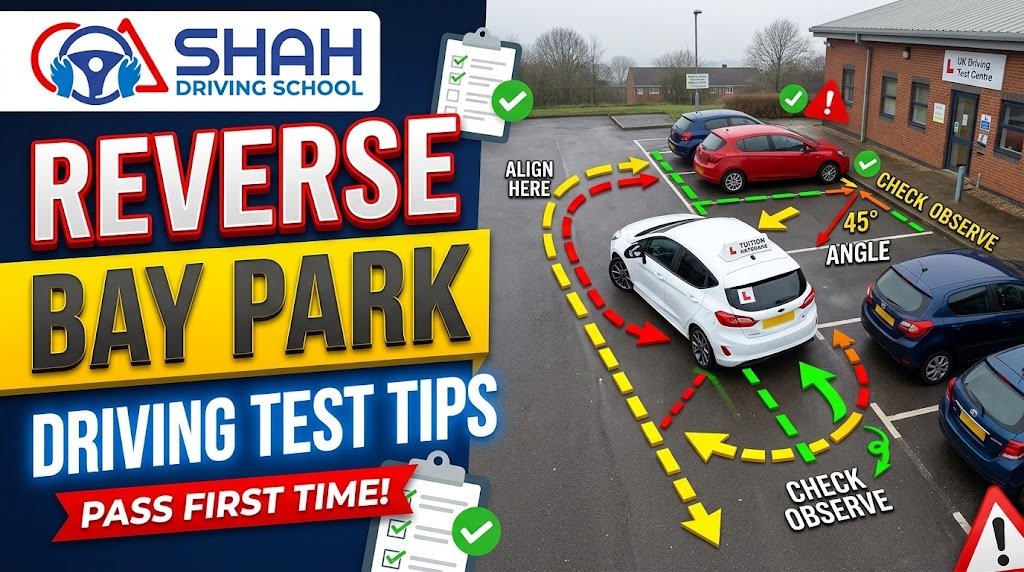
Whether it’s a parallel park, bay park, or pulling up on the right, learners under pressure tend to rush. Rushing leads to poor observations and inaccurate positioning. Mock tests teach you to take your time because examiners actually prefer deliberate, careful execution over speed.
4. Letting Nerves Override Training
Many learners know exactly what to do in theory, but nerves cause them to freeze or overcorrect on test day. Having experienced the pressure of a mock test helps calibrate that response. Your nervous system begins to recognise the format as familiar, rather than threatening.
Practical Steps You Can Take Right Now
You don’t have to wait for your instructor to suggest a mock test. Here’s how to make the most of this tool:
Ask your instructor to run a mock test at the same time of day as your real test. Traffic and light conditions matter more than you’d think.
Request the official DVSA marking sheet. Ask your instructor to use it properly. Understanding what each category means helps you self-assess between lessons.
Do at least two mock tests. One early on, to identify weaknesses. One closer to your test date, to check your progress and build confidence.
Debrief seriously. After the mock test, go through every single fault minor and serious. Ask why each one was marked, not just what was marked.
Drive the test routes. Many test centres publish local routes or you can ask your instructor. Practising on the same roads removes the element of surprise.
Also Read: How to Improve Mirror Checks While Driving a Guide for Learners
Quick Checklist: Mock Test Essentials
Use this before and during your mock test practice:
- Check mirrors before every speed change
- Signal in good time before manoeuvres
- Look both ways genuinely at every junction
- Maintain a safe following distance (two-second rule minimum)
- Check blind spots when moving off and changing lanes
- Match your speed to road conditions, not just the limit
- Complete all manoeuvres slowly and with full observations
- Follow sat-nav instructions calmly during independent driving
- Keep both hands on the wheel unless changing gear
- Breathe don’t rush decisions at junctions
People Also Ask
How many mock driving tests should I take before my real test? Most instructors recommend at least two. One around four to six weeks before your test to highlight weak areas, and one closer to the date to confirm you’re test-ready. More is fine if your confidence needs it.
Does a mock driving test count as a real lesson? Yes it’s typically charged at your normal lesson rate and lasts the same duration as a real test (around 40 minutes), plus debrief time. It’s one of the most valuable lessons you’ll have.
Can I fail a mock driving test? You can receive serious or dangerous faults in a mock test, just as in a real one. This is actually helpful it shows you exactly where you stand and what needs urgent attention before the real thing.
Do mock tests follow the same route as the real test? Not always the exact route, but good instructors use roads local to your test centre and include similar road types dual carriageways, roundabouts, residential areas, and town centres.
Will a mock test help with nerves? Absolutely. Familiarity reduces anxiety. Experiencing the format, the silence from the instructor, and the pressure of being assessed genuinely helps your nervous system prepare for test day.
What the DVSA Says and Current Trends
The DVSA continues to refine what it expects from learner drivers. In recent years, there’s been a growing emphasis on hazard awareness, independent decision-making, and eco-friendly driving (such as smooth acceleration and appropriate gear selection to reduce emissions).
Moreover, the DVSA’s focus on producing safe drivers for life not just drivers who can pass a test means examiners pay close attention to attitude and consistency throughout the full 40-minute assessment. A mock test that runs the full duration gives you the endurance practice you need. Many learners perform well in the first 20 minutes and then fatigue sets in.
In addition, with the increased use of GPS sat-nav during the independent driving section, practising with a mounted device in mock conditions is now considered essential preparation.
A Real-Life Scenario: From Failing Mock to Passing First Time
Consider a learner who had been having lessons for several months and felt ready to book their test. Their instructor ran a mock test and recorded eight driver faults mostly for inconsistent mirror checks and one serious fault for emerging too quickly at a T-junction in poor visibility.
Without the mock test, those faults would likely have appeared in the real test. Instead, over the following three weeks, they focused specifically on junction observation and mirror discipline. Their second mock test was clean no serious faults, only four minors.
They passed their real test first time.
That’s not luck. That’s preparation.
Conclusion
A mock driving test isn’t a luxury it’s an essential part of smart test preparation. It shows you where you actually stand, teaches you what the examiner is genuinely looking for, and gives you the mental rehearsal you need to perform under pressure.
From experience, learners who take mock tests seriously pass faster and waste less money on repeat attempts. The test fee, the stress of rebooking, and the wait for a new date all of that becomes far less likely when you’ve already done a thorough dress rehearsal.
Book your mock test. Take it seriously. Debrief properly. Then go pass.
FAQs
- Is a mock driving test the same as a real DVSA test?
It follows the same format and duration but is conducted by your instructor rather than an official DVSA examiner. It’s a practice run, not an official assessment.
- Can I do a mock test without a driving instructor?
Technically yes, with a supervising driver, but an instructor’s trained eye and official marking sheet makes the experience far more accurate and useful.
- How long does a mock driving test last?
Around 40 minutes of driving, plus a debrief period which can add another 10–15 minutes.
- Should I tell my instructor I want a mock test?
Yes it requires specific preparation on their part, including using the DVSA marking sheet and staying quiet during the assessment rather than coaching.
- What happens if I get a serious fault in my mock test?
It means you’re not yet ready for your real test in that area. It’s the best possible outcome you’ve identified a critical issue with time to fix it, rather than on the day that counts.