Searching for retest driving lessons Bolton usually means your practical test did not go as planned. A failed test is frustrating, but it also gives you useful information. With the right review, your next lessons can focus on the faults that affected your result instead of repeating everything from the beginning.
Shah Driving School supports learners across Bolton, including Farnworth, Deane, Astley Bridge and Tonge Moor. Whether you need help with junctions, roundabouts, manoeuvres, independent driving or nerves, start by understanding what happened and creating a sensible plan.
What should you do immediately after failing your driving test?
Give yourself time to process the result, then look carefully at the examiner’s feedback. Do not assume that one mistake tells the whole story. A learner may have failed because of a serious fault, several repeated driving faults or a pattern of decisions that became unsafe under pressure.
The official DVSA guidance explains that driving tests record dangerous, serious and driving faults. A candidate must have no serious or dangerous faults and no more than 15 driving faults to pass. The examiner should tell you which faults were recorded. Write them down while the details are still fresh, including the road situation, your decision and anything the examiner or instructor said afterwards.
You should also ask whether the problem was a lack of skill, a lapse in concentration or a confidence issue. Those causes need different solutions. A learner who repeatedly misses mirror checks needs a different lesson plan from someone who knows the routine but becomes overwhelmed at a busy Bolton junction.
How retest driving lessons Bolton can help
Retest driving lessons Bolton should begin with diagnosis, not blame. Your instructor can discuss the result, observe your normal driving and compare the two. The purpose is to identify the smallest number of changes that will make the greatest difference to your safety and consistency.
For example, a junction-observation fault may require work on approach speed, effective checks and judging when to emerge. A roundabout fault may need practice reading signs, choosing a lane early, maintaining position and checking before changing direction.
The aim is not to memorise one test route. You need safe habits on unfamiliar roads, while local Bolton practice can expose you to urban junctions, parked vehicles, gradients, traffic lights and roundabouts.

Common areas to review before a Bolton retest
Junctions and observations
Observation faults are often connected to approach speed and planning. If you arrive too quickly, there may be less time to look properly and make a safe decision. If you approach too slowly without a reason, you may hold up traffic or lose a suitable opportunity to proceed. Practise scanning early, identifying hazards and adjusting your speed so that you can make a calm, informed decision.
Roundabouts and lane discipline
Roundabouts require planning before you reach the give-way line. Read the signs and road markings, select the correct lane, check your mirrors and keep a steady position. In Bolton’s busier areas, traffic may obscure markings or another driver may approach unexpectedly. Your instructor should help you respond safely rather than simply rehearse one familiar roundabout.
Manoeuvres and control
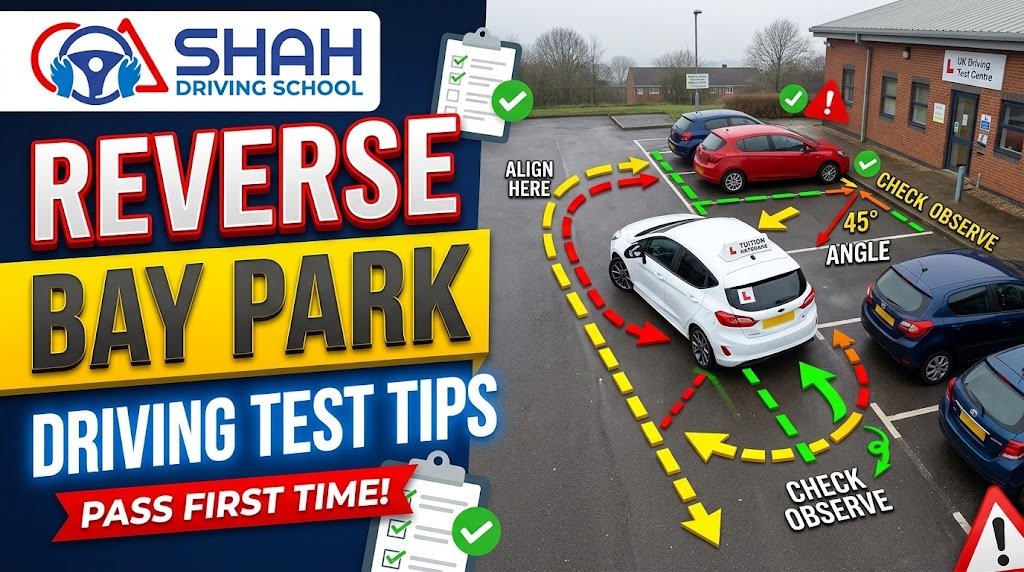
A manoeuvre does not need to be rushed. Before reversing, check the area carefully and continue observing throughout the movement. If the position becomes unsuitable, pause and correct it safely. Retest lessons can focus on parallel parking, bay parking, reversing and pulling up on the right, depending on the areas you need to improve.
Independent driving and directions
Independent driving tests your ability to plan while maintaining safe control. If you take a wrong turn, do not panic. A safe, legal alternative is better than making a sudden manoeuvre to follow a direction. Practise listening to instructions, checking signs, using navigation prompts appropriately and making decisions with enough time.
Speed, following distance and anticipation
A learner can fail without driving dramatically badly. Small lapses in speed control, following distance or anticipation can build into a serious problem. Work on looking beyond the vehicle directly in front, identifying developing hazards and changing speed smoothly. The official Highway Code covers speed, stopping distances, junctions, roundabouts and general road use.
Should you book another test straight away?
It is usually better to book when you are ready rather than choose a date simply because it is available. The correct timing depends on the faults recorded, your current confidence, your private practice and the amount of supervised driving you can complete before the next attempt.
The official GOV.UK driving-test guidance explains that, after an unsuccessful test, you must book another test and choose a date at least 10 working days away. Use the time to work through a targeted plan. If your instructor believes you are not yet consistent, another date may create unnecessary pressure and extra lesson costs.
Ask your instructor for a clear readiness conversation. Can you explain the fault that caused the failure? Can you demonstrate the corrected approach on different roads? Can you recover safely when traffic, directions or weather are not ideal? These questions are more useful than simply counting the hours since your last test.
A practical retest lesson plan
A useful plan starts with a fault review and assessment drive. Priorities can then be divided into manageable blocks covering junctions, roundabouts, manoeuvres and independent driving before a realistic mock test.
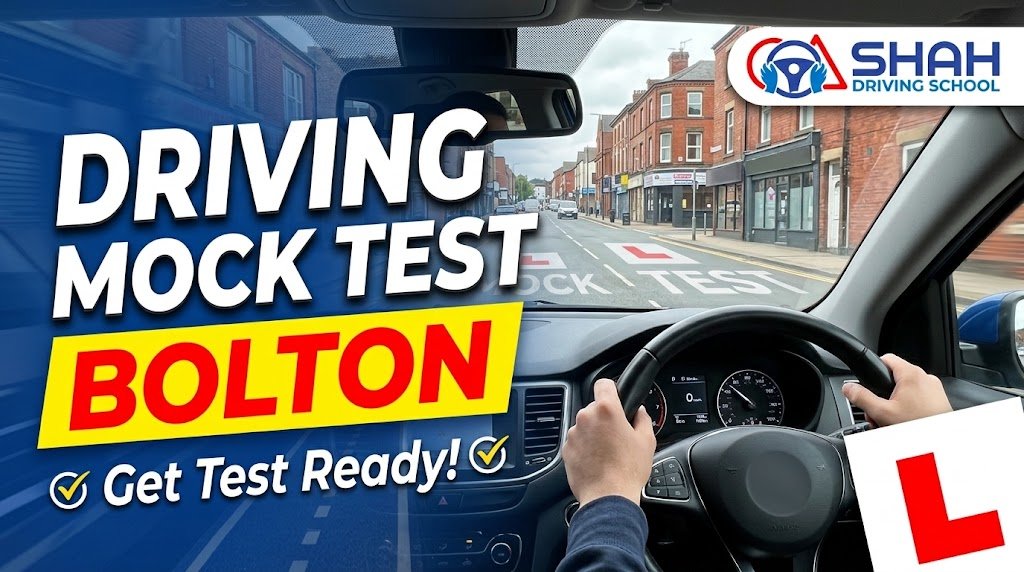
Shah’s mock test and final preparation page is a useful related resource. If you need more focused tuition, discuss whether the school’s intensive driving lesson options suit your situation.
Between lessons, record the road type, task, progress and remaining prompts. This makes each session more productive.
What if nerves caused the failure?
Nerves are common, but they should not be treated as a character flaw. Test pressure can affect concentration, speed, decision-making and memory. If you normally drive safely but made several unusual mistakes on the day, tell your instructor. You may benefit from practising the test routine, completing a mock drive, using calmer self-talk and gradually introducing more pressure.
A realistic mock test can help you become familiar with the sequence of the practical exam. It should still be treated as practice, not a guarantee of what will happen on the day. Your goal is to build reliable routines: prepare, observe, decide, act and review the situation without rushing.
If anxiety is severe or linked to a health condition, seek appropriate professional advice. Driving instruction can support practical confidence, but it is not a substitute for medical advice.
How to choose the right retest instructor in Bolton
Choose an instructor who will examine the result with you and connect each lesson to your specific faults. Ask about manual or automatic tuition, area coverage, assessment, lesson length, current pricing and cancellation terms. Avoid providers that guarantee a pass or claim to know the exact route, because routes and traffic conditions vary.
If you are ready to discuss your next attempt, contact Shah Driving School with your postcode, transmission preference, test centre, recorded faults and preferred lesson times. That information gives the instructor a practical starting point.
Frequently asked questions
Are retest driving lessons only for people who failed badly?
No. One focused lesson may help after a minor setback, while several lessons may be appropriate after a more serious problem. Tuition should reflect your faults, confidence and consistency.
Can I have retest lessons if I learned with another school?
Yes, subject to instructor availability. A new instructor may begin with an assessment drive to understand your current standard.
Do I need another mock test before rebooking?
Not always, but a realistic mock test can reveal whether the original faults have been corrected under pressure. It should be one part of preparation, not the only measure of readiness.
Can I take retest lessons in an automatic car?
This depends on the vehicle and instructor available. Tell Shah whether you need manual or automatic tuition when you enquire so the correct option can be discussed.
How do I book another practical test?
Use the official GOV.UK book-your-driving-test service and check the current requirements before booking. Your instructor can help you decide when you are ready, but the booking should be made through the official service.
Book retest driving lessons in Bolton
A failed test does not erase the progress you have already made. It gives you a set of issues to address. With a calm fault review, targeted practice and honest feedback, your next lessons can be more focused than your first round of preparation.
If you are looking for retest driving lessons Bolton, send Shah Driving School your test feedback and the areas that caused difficulty. The school can then discuss whether you need a single assessment, targeted lessons or a broader preparation plan before you choose your next test date.