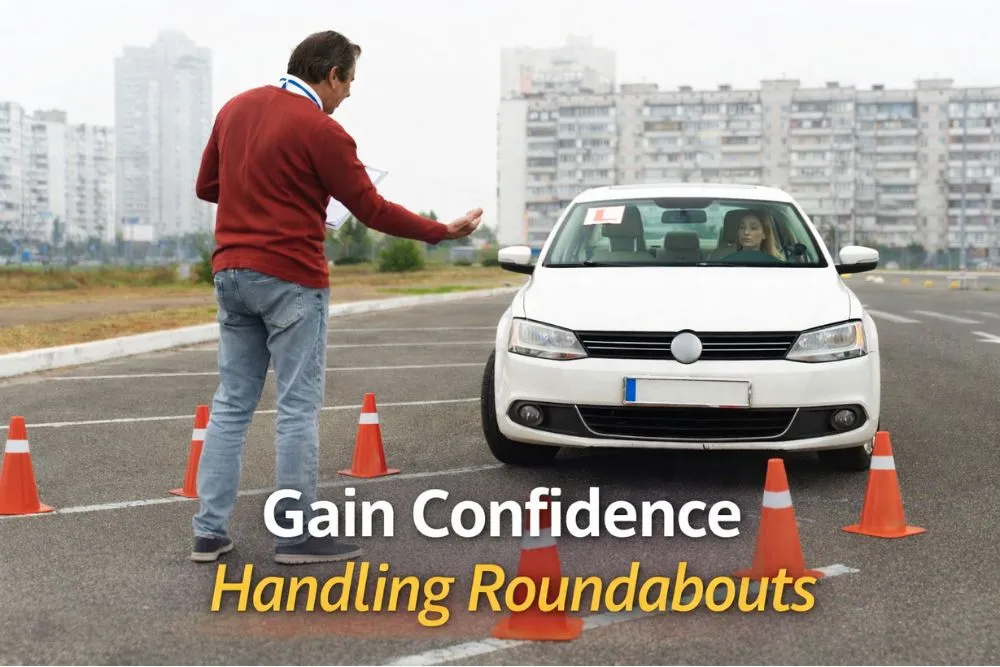

If you’re preparing for your practical driving test, mastering roundabout driving test tips UK-style is one of the most valuable things you can do. Roundabouts are a staple of British roads, and examiners know exactly what to look for when you approach one. Getting them right could be the difference between a pass and a fail.
The good news is that roundabouts follow a consistent set of rules. Once you understand those rules and practise them properly, they stop feeling intimidating and start feeling routine. This guide walks you through everything you need to know.
Roundabouts are one of the most common sources of driving test faults in the UK. According to data published by the Driver and Vehicle Standards Agency (DVSA), observation and lane discipline are among the top reasons candidates receive serious or dangerous faults. Roundabouts demand both of those skills simultaneously.
The pressure of the test environment makes things worse. You’re already nervous, and then a multi-lane roundabout appears out of nowhere. Without solid preparation, it’s easy to hesitate, take the wrong lane, or fail to give way correctly.
However, examiners aren’t trying to catch you out. They want to see that you can handle real traffic situations safely and confidently. Roundabouts give them a clear window into your decision-making, observation, and lane discipline all at once.
Before thinking about test technique, it helps to understand the Highway Code rules that govern roundabout use. Rule 185 of the Highway Code states that you must give priority to traffic coming from the right, unless road markings or signs indicate otherwise.
That one rule underpins everything. Traffic already on the roundabout has priority. You wait at the give way line until there’s a safe gap, then you move off smoothly and take the appropriate exit.
In addition, you must signal correctly when exiting, stay in your lane throughout the junction, and check your mirrors before changing position. These aren’t optional courtesies they’re the behaviours your examiner is actively assessing.
Read More: Driving Anxiety Is Real: How to Overcome Nerves Before Your UK Practical Test
The moment you see a roundabout sign or the junction ahead, start planning. Use your mirrors to check your speed and position, then read the road layout. Ask yourself: which exit am I taking, which lane do I need, and what’s the traffic doing?
If your examiner asks you to take the second exit, for example, you need to know whether that means going straight ahead or turning right. Counting exits in advance removes the guesswork when you’re actually in the junction.
Lane discipline is where many learners go wrong. As a general guide:
For the first exit (turning left), position yourself in the left lane and signal left as you approach. For the second exit (going straight ahead), approach in the left lane on smaller roundabouts or follow the road markings on larger ones. Do not signal on approach signal left after passing the exit before yours. For the third exit or beyond (turning right), approach in the right lane and signal right. Switch your signal to left once you’ve passed the exit before yours.
Always follow road markings over these general rules. Some roundabouts have unusual lane arrangements that override the standard approach, and your examiner will expect you to follow the signs.
When you arrive at the give way line, slow down and look right. If there’s traffic on the roundabout, wait. If it’s clear or there’s a safe, comfortable gap, move off confidently. Hesitating too long can actually result in a fault as can pulling out when it isn’t safe.
Practise judging gaps during your lessons. Your instructor can help you develop that instinct so it feels natural by test day.
Failing to look properly is one of the most serious faults an examiner can record. Before moving onto a roundabout, check right, then ahead, and also glance left to ensure you won’t cut across someone already exiting. Keep scanning throughout the situation can change quickly.
Moving from the right lane to the left lane mid-roundabout without checking mirrors and signalling is a serious fault. Always commit to your lane and only move when it’s completely safe to do so.
Many learners focus so hard on getting through the roundabout that they forget to signal left before their exit. This matters because other drivers and your examiner are watching. Make it part of your routine: pass the exit before yours, then signal left, check your mirror, and take your exit.
Stalling on a roundabout can be dangerous and will likely result in a serious fault. Practise your clutch control on uphill starts so you’re comfortable moving off from a standing position under light pressure. Also, avoid waiting for a completely empty roundabout when a safe gap exists that shows poor judgement.
Mini roundabouts follow the same basic rules as larger ones, but they require quicker reactions because everything happens in a smaller space. You still give way to the right, and you still need to signal when exiting.
One important point: on a mini roundabout, you must not drive over the central white circle if it can be avoided. The painted circle is a physical reminder to navigate around the junction, not across it.
Mini roundabouts can catch learners off guard because they appear quickly and leave little time to react. Therefore, developing good hazard perception skills during your lessons will make a real difference here.
Also Read: Parallel Parking Made Easy: Step-by-Step Guide for UK Learner Drivers
Do I need to signal when approaching a roundabout? Only if you’re turning left. For straight-ahead and right turns, you don’t signal on approach you signal on exit.
What happens if I take the wrong exit on my driving test? Taking the wrong exit isn’t automatically a fail if you handle it safely. Your examiner may redirect you. However, causing danger while correcting the mistake could result in a serious fault.
Can I fail my driving test just because of roundabouts? Yes. Poor observation, wrong lane choice, or failing to give way correctly can result in serious or dangerous faults, which lead to an automatic fail.
How many roundabouts will I encounter on a driving test? This varies depending on your test centre and the local road network. Most candidates encounter at least two or three roundabouts during a standard test.
Is a double mini roundabout the same as a regular roundabout? The same give-way rules apply, but you treat each circle as a separate roundabout. Approach each one individually and give way to traffic from the right at each circle.
Confidence comes from repetition. Ask your instructor to take you through a variety of roundabout types mini, standard, and multi-lane across different times of day. Practising in quieter traffic first and then building up to busier junctions mirrors how most instructors structure their lessons.
Also, use theory test revision to reinforce your understanding of road signs and lane markings. A strong theoretical foundation makes your practical decision-making much faster and more reliable.
Mental rehearsal also helps. Before your test, visualise approaching common roundabout types, choosing your lane, and exiting cleanly. Many driving instructors recommend this technique because it builds familiarity without the pressure of real traffic.
When you approach a roundabout during your test, run through this in your head:
Check your mirrors and adjust your speed early. Read the lane markings and position correctly. Look right before the give way line. Move off when there’s a safe gap not before, not too late. Keep checking mirrors and stay in your lane. Signal left after the exit before yours. Exit smoothly and cancel your signal.
It sounds like a lot, but with enough practice, these steps become second nature. Your examiner wants to see them done naturally and confidently, not robotically.
Roundabouts don’t have to be the most stressful part of your driving test. With the right preparation, a solid understanding of the Highway Code, and plenty of practice in different road conditions, you can approach every roundabout on test day with real confidence.
Keep your observation sharp, commit to your lane, signal at the right moment, and trust your training. That’s genuinely all it takes. The roundabouts that once felt daunting will quickly become some of the most manageable junctions on the road.
Give way to traffic coming from your right. This is the fundamental rule that governs all roundabout use under the Highway Code.
Yes always approach at a speed that gives you time to assess the junction and stop safely if needed.
Only if road markings direct you to. Always follow lane markings over general guidance.
Not necessarily one stall may only be a minor fault. However, stalling in a dangerous position or repeatedly can result in a serious fault.
Apply the general Highway Code guidance: left lane for left and straight ahead, right lane for right turns and beyond.
WhatsApp us