
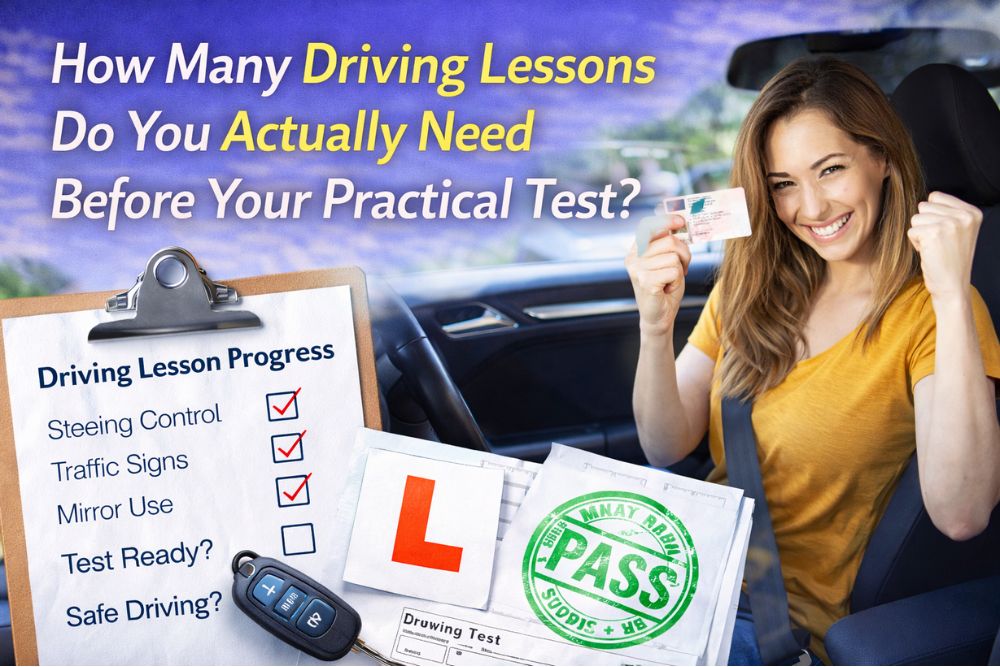
One of the most common questions learner drivers ask is: how many driving lessons do you actually need before your practical test? It is a fair question, and the straight answer is that it depends on the individual. There is no single number that works for everyone, but there is solid guidance to help you plan realistically.
This article is written for UK learner drivers, Indian learners living in the UK, parents of learners, and anyone researching driving schools. Everything here is based on DVSA guidance and practical driving instructor experience.
The DVSA does not set a mandatory minimum number of lessons. However, research consistently shows that the average learner in the UK takes around 45 hours of professional tuition before passing their practical test. Many learners also supplement this with around 20 hours of private practice driving with a family member or friend.
These are averages, not targets. Some learners are ready in fewer hours. Others need more. What matters is genuine practical test readiness, not hitting a specific number.
Younger learners who have never driven before often need more time to build confidence and coordination. Learners who have driven abroad, including those who drove in India before moving to the UK, may adapt more quickly to UK roads, though adjusting to left-hand driving and different road rules still takes time.
A learner who has one lesson per week will take longer to reach practical test readiness than someone having two or three lessons weekly. The brain retains skills better when they are reinforced regularly.
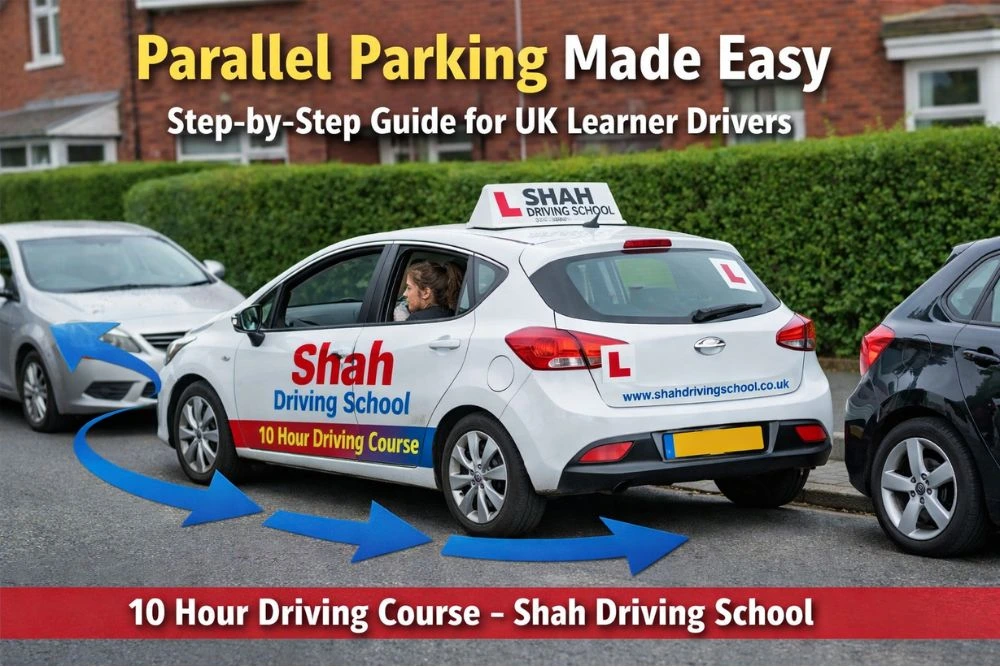
Some people absorb information quickly behind the wheel. Others need repetition and more time in specific situations, such as roundabouts, parallel parking, or dual carriageways. Your instructor will assess your progress honestly and advise when you are genuinely ready.
Private practice driving between lessons makes a significant difference. Practicing with a parent or supervising driver in familiar areas helps build confidence and reduces the total number of paid lessons needed.
Manual driving lessons typically take longer because learners must master clutch control, gear changes, and bite point alongside all other driving skills. Most learners find the first few lessons more demanding in a manual car. If you are ready to take that step, explore our manual driving lessons in Bolton to find the right package for your level.
Automatic driving lessons remove the need to manage gears and clutch, which means many learners progress faster. If you struggle with manual coordination or simply want to get on the road sooner, automatic lessons are worth considering. Shah Driving School offers flexible automatic driving lessons in Bolton with DVSA-approved instructors who are experienced in helping complete beginners build confidence quickly.
It is important to know that if you pass your practical test in an automatic car, your licence will restrict you to automatics only. Passing in a manual gives you full entitlement to drive both.
An intensive driving course UK learners often consider is sometimes called a crash course. These courses pack many hours of tuition into one or two weeks, allowing some learners to prepare for their test quickly.
Intensive courses can work well for learners who can focus fully and have some prior experience. However, they are not suitable for everyone. Some learners feel overwhelmed and retain less when lessons are compressed into a short period.
Weekly lessons spread over several months allow skills to settle naturally. Most learners build stronger, more confident driving habits this way. If you need to pass quickly, our intensive driving courses in Bolton are structured to give you focused, accelerated training without cutting corners on safety. The right approach ultimately depends on your schedule, budget, and learning style.
Read More: How to Book Your UK Driving Theory Test: A Step-by-Step Guide for Bolton Learners
Practical test readiness is about consistent performance, not occasional brilliance. You are likely ready when you can:
Your driving instructor should be the one to confirm you are ready. Booking your practical test before you are genuinely prepared wastes money and can knock your confidence.
Driving lessons cost UK learners on average between £35 and £45 per hour depending on location and instructor. In London and other major cities, costs can be higher.
If you need 45 hours of professional tuition, you could be looking at between £1,575 and £2,025 in lesson fees alone. Add the theory test fee, practical test fee, and any intensive course costs, and the total investment becomes clear.
Planning your budget early helps you pace your lessons sensibly rather than rushing to test before you are ready.
Reducing the number of lessons you need does not mean cutting corners on safety. Here are sensible ways to progress efficiently:
Supplement with private practice driving. Regular private practice driving between lessons reinforces what you have learned and builds muscle memory faster.
Have lessons more frequently. Two lessons per week instead of one can significantly shorten the overall time to reach practical test readiness.
Focus on weak areas. Ask your instructor to spend time on the specific skills you find difficult rather than repeating exercises you have already mastered.
Review your lessons mentally. Thinking through what you practised after each lesson helps your brain consolidate the learning.
Many learners end up needing more lessons than expected because of avoidable habits.
Leaving too long between lessons means skills fade and time is spent re-covering old ground. Booking the practical test too early leads to failed attempts, added costs, and lost confidence. Relying only on professional tuition without any private practice driving slows overall progress. Ignoring instructor feedback or not engaging actively during lessons reduces the value of each hour.
Being honest with yourself and your instructor about your readiness is one of the most important things you can do.
So, how many driving lessons do you actually need before your practical test? The realistic answer is that most learners in the UK need around 45 hours of professional tuition, often combined with private practice driving. DVSA recommended hours give a useful benchmark, but your individual progress is what truly matters.
Whether you choose manual driving lessons, automatic driving lessons, or an intensive driving course UK providers offer, the goal is the same: to be a safe, confident, and competent driver before you sit your test.
Work closely with your instructor, practise consistently, and focus on quality over quantity. That is the most reliable path to passing.
Read More: How Much Is the Cost of Driving Lessons? UK Prices Breakdown
How many driving lessons does the average learner need in the UK? Research referenced by the DVSA suggests most learners take around 45 hours of professional tuition before passing. This varies depending on prior experience, lesson frequency, and access to private practice driving.
Can you pass your driving test with just 20 lessons? It is possible for some learners, particularly those with prior driving experience, but it is not typical. Most learners need significantly more time to reach consistent practical test readiness across all driving situations.
Are intensive driving courses worth it? An intensive driving course UK learners consider can be effective if you learn well under pressure and have some prior experience. For complete beginners or those who need more time to build confidence, weekly lessons usually produce more reliable results.
Does private practice driving count towards your readiness? Yes, private practice driving plays a valuable role in developing confidence and reinforcing skills between lessons. It does not count as formal DVSA recommended hours, but it genuinely reduces the number of professional lessons many learners need.
What should you do if you fail your practical test first time? Failing is common and does not reflect your long-term ability. Speak to your instructor, identify the specific faults from your result, and continue lessons to address those areas before rebooking.
“`html id=”faqjsonld04″
“`

WhatsApp us