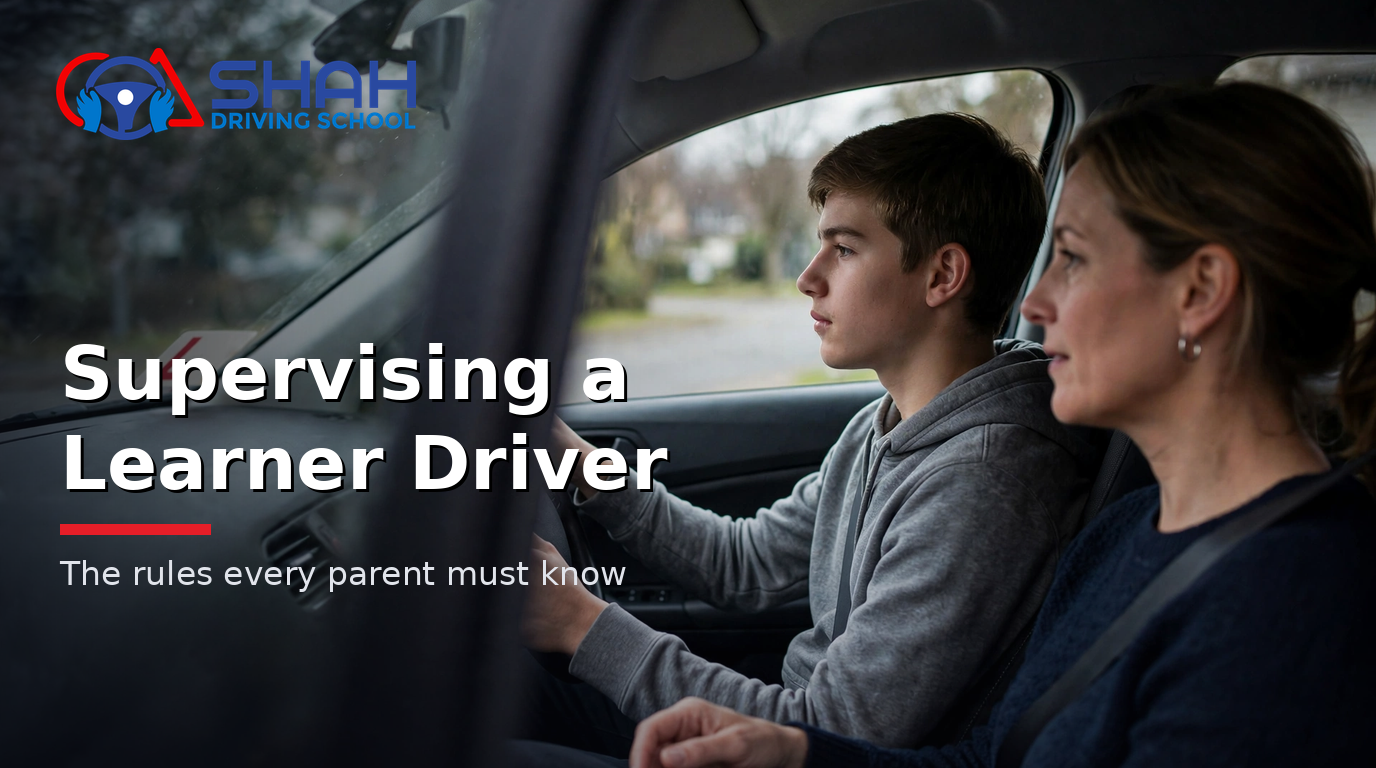
Your teenager has a provisional licence, and now they want you in the passenger seat. Private practice is one of the best things you can do for a learner — the DVSA says the average learner who passes has had around 45 hours of professional lessons and 22 hours of private practice on top. Those extra hours build the confidence that lessons alone cannot.
But supervising is not just sitting next to them. It is a legal role with strict rules, and getting them wrong carries real penalties — for your child, before they have even passed. This guide covers who can supervise, what the law demands during every session, and how to supervise well.
Who Can Supervise? The Four-Rule Check
To sit next to a learner driver in Great Britain, you must meet all four conditions:
- Be over 21 years old.
- Have held a full driving licence for at least three years — a licence from the UK, the EU, Switzerland, Norway, Iceland or Liechtenstein counts.
- Be qualified to drive the type of vehicle being used. If your child is learning in a manual car, you must hold a manual licence. An automatic-only licence does not qualify you to supervise in a manual.
- Not be banned from driving, and hold a valid licence.
You must also sit in the front passenger seat for the entire session. Supervising from the back seat does not count, and it is not legal.
If any condition fails, it is your child who pays the price: a fine of up to £1,000 and up to six penalty points on their provisional licence — before they have even passed their test. Points on a provisional licence stay on the record and count towards the six-point limit that revokes a new driver’s licence in their first two years.
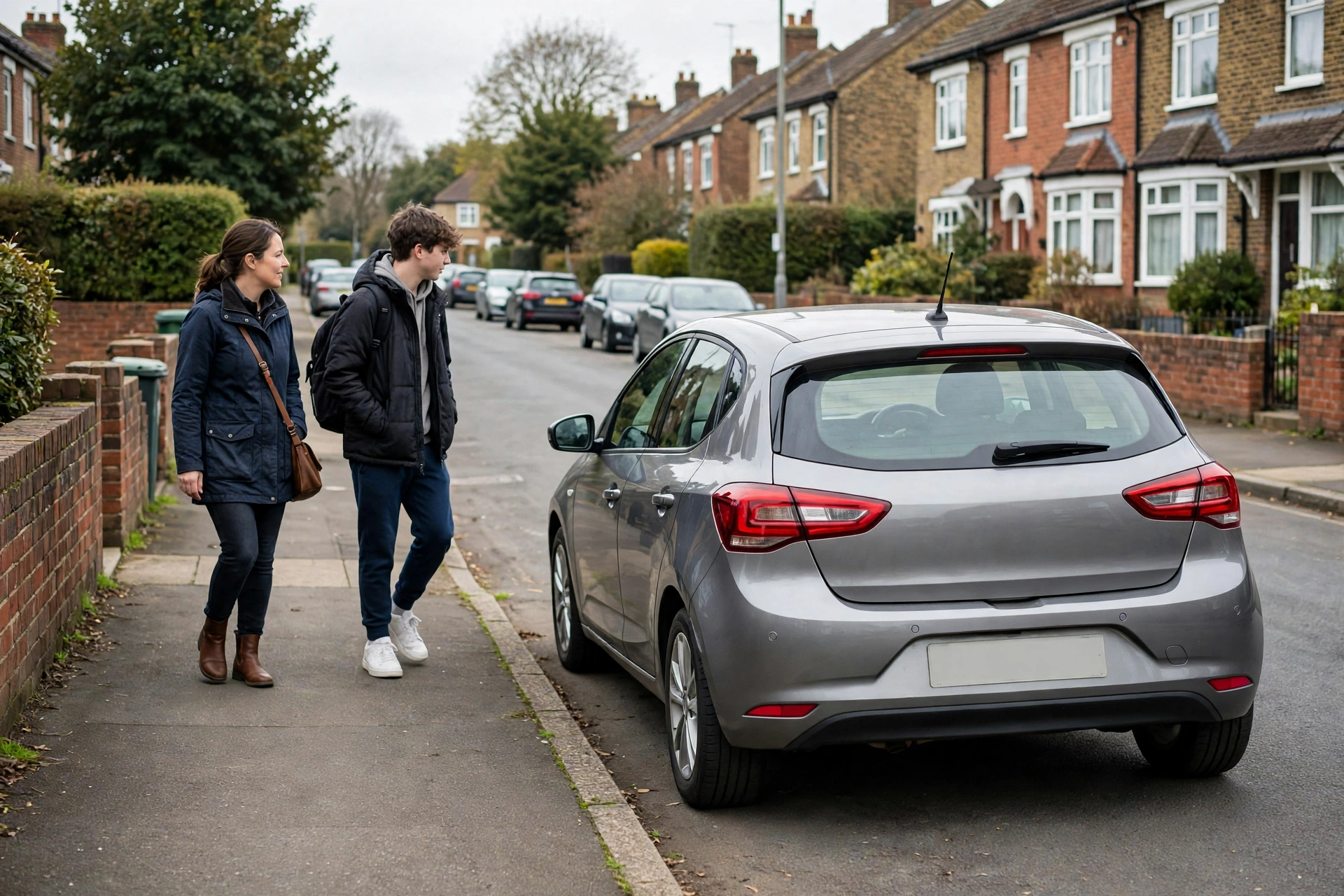
Before the first practice drive: check the supervisor rules, the L plates and the insurance.
The Car and Insurance: A Short Summary
Before the first practice drive, two things must be in place:
- Red L plates displayed front and rear, and a valid provisional driving licence for the learner. A learner must never drive alone — not even a short trip, not even “just around the corner.”
- Correct insurance. If your child practises in your car, they need to be covered — either as a named driver on your policy or through a dedicated learner insurance policy. If they practise in their own car, they must be the registered keeper and hold their own learner insurance. Note that some insurers require the supervisor to be aged 25 or over, so check the policy wording.
Driving without insurance can mean an unlimited fine, a driving ban and up to 8 penalty points. It is the rule families most often get wrong, and the most expensive one to miss.
The full detail on cars, insurance types and costs belongs to our next guide on private practice — this article stays focused on the supervisor’s role.
The Rules During Every Session
Once you are in the passenger seat, the law treats you almost like a driver. These rules apply every time:
- No phone, tablet or sat nav. Highway Code Rule 149 is explicit: you must not use a hand-held mobile phone or similar device when supervising a learner driver. A supervisor caught on the phone can face a fine starting at £200 and up to £1,000, plus six points on their own licence. Put the phone away before you set off.
- No alcohol or drugs. The same legal limits apply to you as they would behind the wheel. Supervising after drinking is an offence, and it can cost you your own licence.
- No motorways. Learners may only drive on a motorway when accompanied by an approved driving instructor in a car fitted with dual controls. Motorways are strictly off-limits for private practice sessions, however confident your child seems.
- No payment — ever. You cannot charge for supervising a learner, not even petrol money. Only a qualified driving instructor (ADI) or a trainee instructor may be paid for teaching someone to drive. Charging a learner as a family member or friend is illegal.
- Stay alert and in control of the session. You are the second pair of eyes. Watch the road ahead, anticipate hazards, and be ready to give calm, clear instructions.
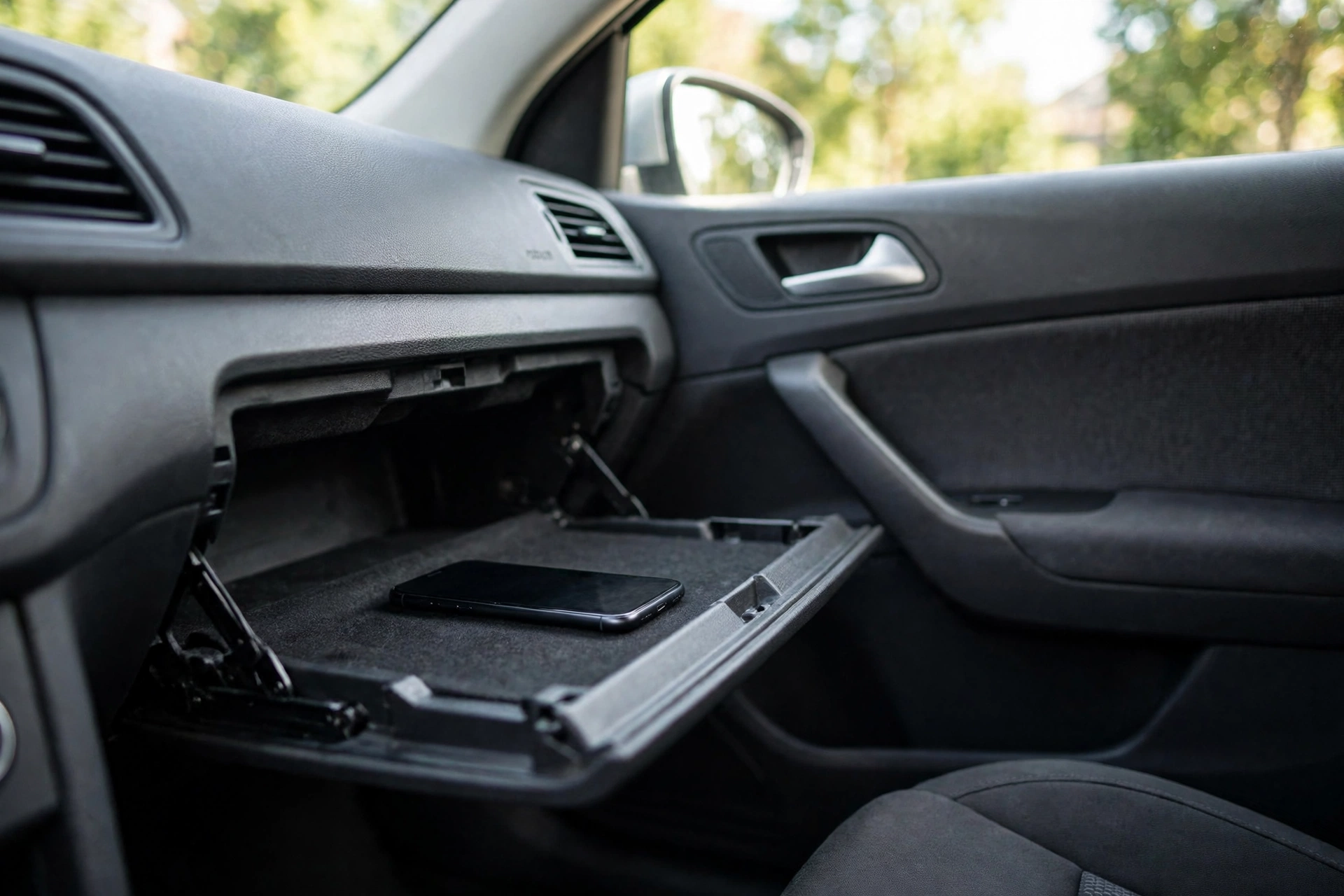
No phone while supervising — Highway Code Rule 149, up to £1,000 and six points.
What Happens If You Get It Wrong
The penalties fall on both sides of the car:
- Wrong supervision: your child faces up to £1,000 and up to 6 points on their provisional licence.
- Phone use while supervising: you face £200–£1,000 and 6 points on your own licence.
- No insurance: an unlimited fine, a ban and up to 8 points.
- Drink or drugs while supervising: charges, fines, and possible loss of your own licence.
None of these require an accident. A routine police stop is enough.
What Good Supervising Looks Like
The law is the minimum. Good supervising is what actually helps your child pass:
- Plan the session. Agree beforehand what you will practise — junctions, roundabouts, a specific manoeuvre — instead of driving aimlessly.
- Match the instructor’s methods. Ask your child’s instructor what they are working on and how it is taught. Conflicting instructions from parent and instructor are the single biggest cause of confusion in private practice. Our manual driving lessons include guidance for parents on exactly this.
- Keep sessions short and calm. Thirty to forty-five minutes of focused practice beats two tense hours. End on a success, not on an argument.
- Give specific, calm feedback. “You checked the mirror late at that junction” helps. “You never look!” does not. Praise what went right first.
- Practise what the instructor set. Private practice works best as homework for lessons, not as a separate driving school with different rules.
- Rearrange if either of you is stressed. If you are tired, rushed or already annoyed, skip the session. A bad practice drive teaches bad habits and damages confidence. There is always tomorrow.
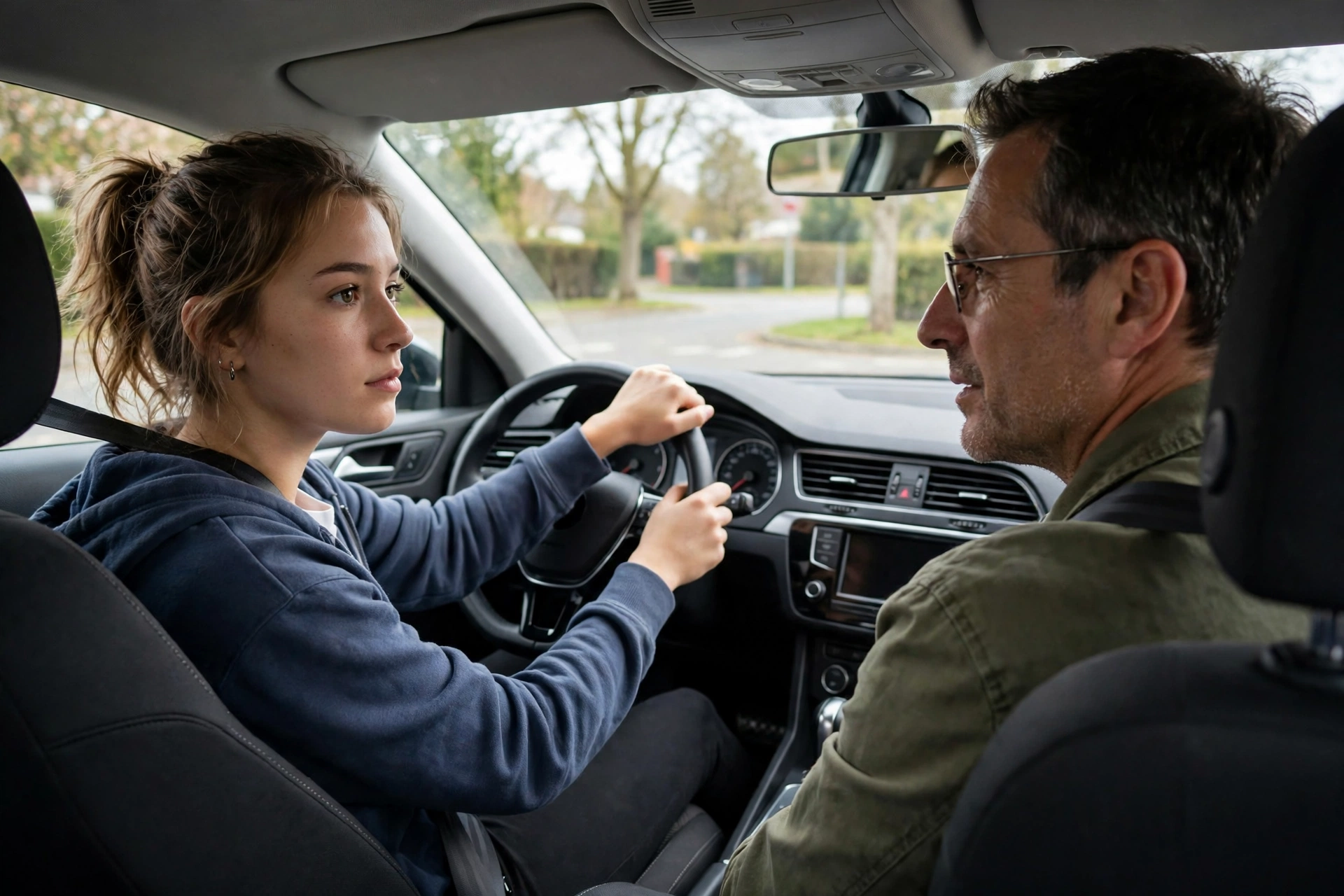
Good supervising is planned, calm and short — match the instructor’s methods.
Five Mistakes Parents Make
- Teaching your own old habits. The test has changed since you passed. Mirror-signal-manoeuvre routines, roundabout rules and manoeuvres are taught differently now. Trust the instructor’s methods.
- Shouting or grabbing the wheel. It startles the learner, and it teaches them to freeze instead of think. If you need to intervene, use a calm, firm instruction.
- Sessions that run too long. Fatigue sets in, mistakes multiply, and both of you leave frustrated.
- The motorway temptation. “Just one junction on the motorway” is still illegal in private practice. Wait for the instructor.
- Treating practice as a test. Every drive does not need a verdict. Most drives just need miles, calmly done.
FAQs About Supervising a Learner Driver
I passed my test two years ago. Can I supervise my child?
No. You must have held a full licence for at least three years, as well as being over 21. One more year to go.
Can my 20-year-old son supervise his younger sister?
No — supervisors must be over 21, even if they have held a licence for three years.
Can my child drive on the motorway with me supervising?
No. Motorway driving for learners is only allowed with an approved driving instructor in a dual-control car. This is a hard rule, with no exceptions for family practice.
Can I ask my child to pay for petrol?
No. Charging for supervising — including fuel money — is illegal unless you are a qualified instructor. Keep it as a favour, or don’t do it.
Do I need to be named on the insurance?
The learner must be properly insured to drive the car — as a named driver or through learner insurance. Check the policy: some insurers also require the supervisor to be 25 or older, so read the terms before the first drive.
More questions? Read our frequently asked questions page.
The Passenger Seat Matters
Twenty-two hours of private practice is a serious contribution to your child’s driving — roughly a third of the total time the average learner needs. Done legally and calmly, it turns a nervous learner into a confident driver and saves real money on lessons. Done carelessly, it risks points, fines and bad habits that the instructor then has to undo.
Shah Driving School teaches manual and automatic lessons across Bolton, Horwich, Atherton and Farnworth, and we work with parents as partners — telling you what to practise and how. Book your child’s lessons today, or consider an intensive driving course if their test date is approaching. And if your child is considering the test in your car, read our own-car checklist first.