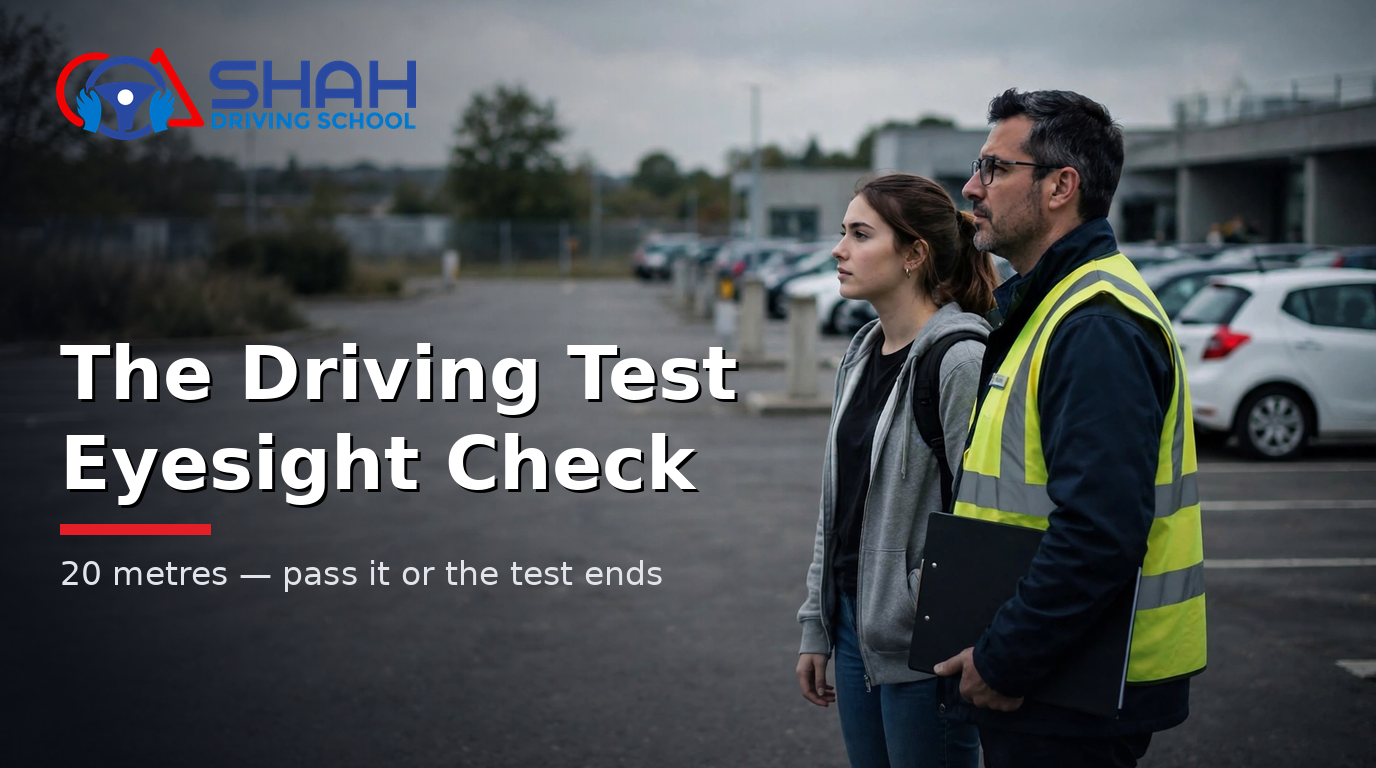

Your driving test begins before you touch the steering wheel. In the test centre car park, the examiner points at a parked car and asks you to read its number plate. Pass, and the test begins. Fail, and the test ends right there — before a single manoeuvre, before a single junction.
Every year, learners lose their test fee to this 30-second check. Not because the standard is unfair, but because they never prepared for it. This guide explains the exact rules, the distances, the glasses policy, and what happens if you fail — plus how to make sure you pass.
The eyesight check is the first of the four parts of the UK practical driving test. Before the show me, tell me questions, before the general driving, before any reversing, the examiner tests whether you can see well enough to drive safely.
It works like this. The examiner points to a parked vehicle’s number plate and asks you to read it. You read it aloud. That is the whole check — no machines, no charts, no trick questions. But the rules behind it are strict, and the consequences of failing are severe.
The distance depends on the style of number plate:
Twenty metres is roughly five car lengths — further than most learners guess. The examiner does not start with a tape measure. They first ask you to read a plate that is obviously further than 20 metres away. If you cannot read it, they ask for a second plate, and may let you walk forward until you are just beyond the correct distance. If that fails too, a third plate is measured precisely with an official tape.
So you get more than one chance — but each chance is at the real distance. There is no negotiation on the number.
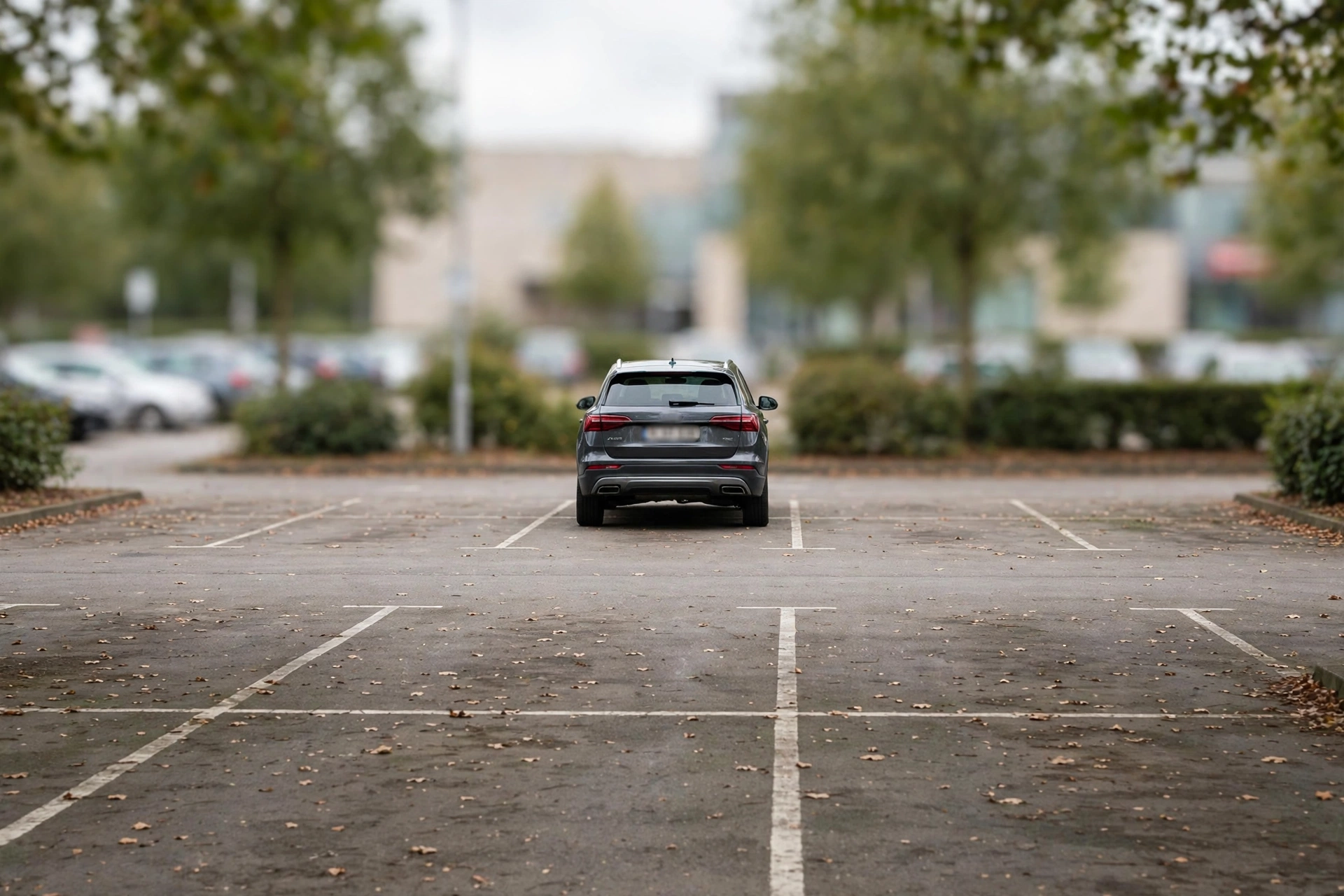
Twenty metres is about five car lengths — further than most learners guess.
You are absolutely allowed to wear glasses or contact lenses for the eyesight check. There is no penalty for using them — only a penalty for failing without them.
The rules are simple but firm:
The message is clear: glasses are not a weakness on test day. They are equipment. Use them.
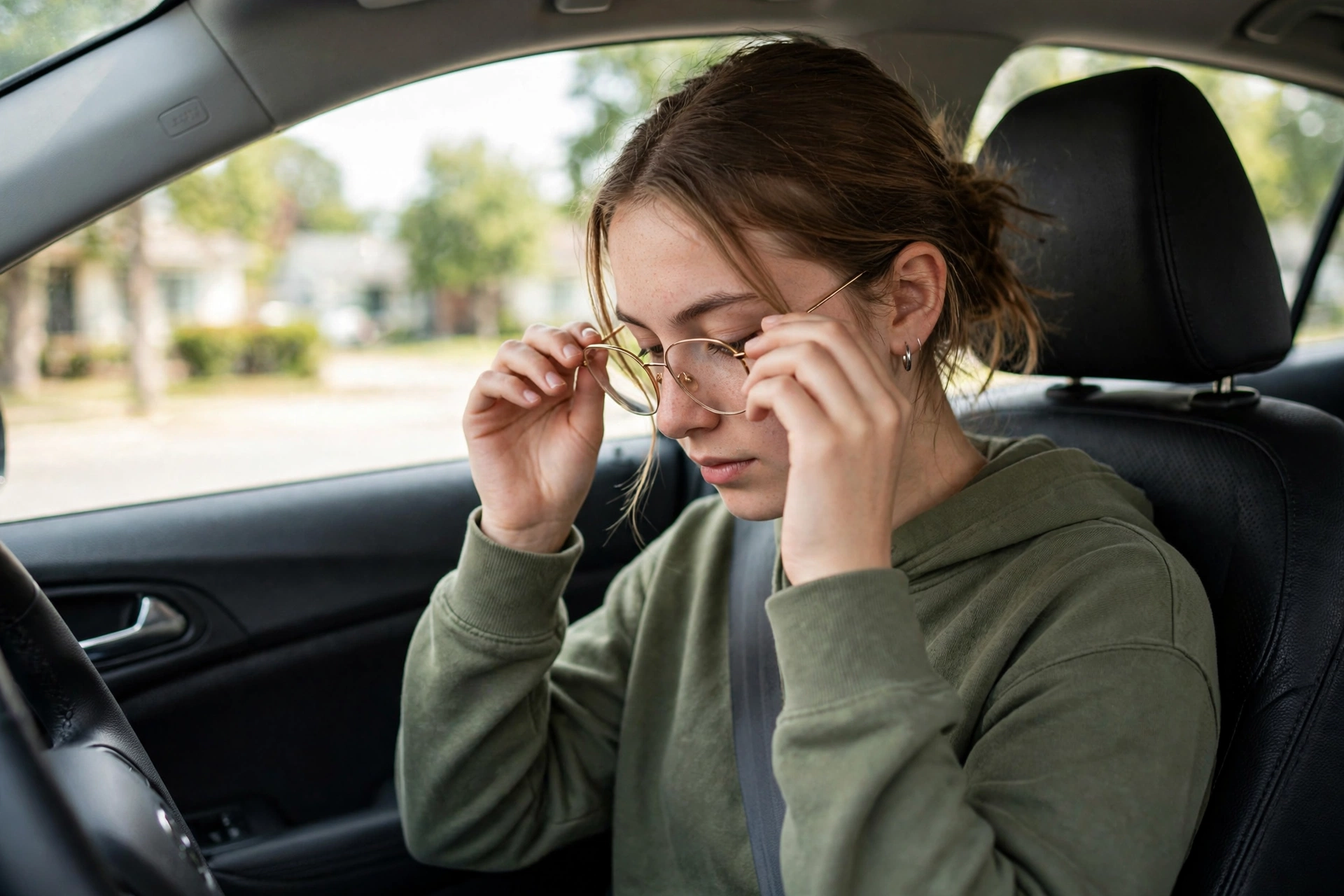
Glasses are equipment, not a weakness — wear them for the check and the whole drive.
This is the part every learner should understand before test day:
One failed number plate reading can therefore cost you weeks and the full test fee. It is the most expensive 30 seconds of the driving test — which is exactly why preparation matters.
The number plate test is not arbitrary. It reflects the legal minimum standard for driving in the UK:
You must also tell the DVLA about certain eye conditions that affect your sight. Failing to declare a condition that affects your driving can lead to a £1,000 fine. The NHS recommends an eye test every two years, and that rhythm is the easiest way to stay legal.
Preparation is simple, and it takes ten minutes:
Our instructors check this with every pupil before test day. If you are learning with us, in manual driving lessons or on an intensive driving course, we will run the 20-metre check with you in the car park before your test. It takes a minute and removes all doubt.
Wear your normal prescription glasses or contact lenses. Sunglasses, especially dark or tinted ones, can make the plate harder to read and give the examiner no useful information. Save them for after the test.
First you must resolve the eyesight issue — usually with glasses or treatment — then pass a DVSA eyesight test at a test centre. Only then can your licence be reinstated and a new practical test booked.
For the final check, yes — an official tape is used to measure the precise distance from the third plate. The earlier attempts use plates at obviously greater distances, with the option to walk closer.
If you need them to read a number plate at 20 metres, yes — wear them for the check and for the whole drive. The rule is about what you need, not what the glasses were prescribed for.
Yes, if you meet the legal standard with your remaining eye — but you must notify the DVLA. Monocular drivers face additional assessment, so sort this out well before booking a test.
More questions? Read our frequently asked questions page.
The eyesight check is the simplest part of the driving test and the easiest to prepare for. Twenty metres, a number plate, and the glasses you already own. Practise it once, and it becomes the calmest moment of your test day instead of the scariest.
Shah Driving School teaches manual and automatic lessons across Bolton, Horwich, Atherton and Farnworth, with full test-day preparation — including the eyesight check — built into every course. Book your lessons today, and walk into your test knowing you can see it through. If you are taking the test in your own car, read our own-car checklist too.
WhatsApp us