
Ask ten learners what fails a driving test, and you will get ten different answers. Most of them are wrong. Myths about the driving test spread faster than facts — in group chats, in driving school waiting rooms, from well-meaning friends who failed once and blamed everything except their driving.
The problem is not just that these myths are wrong. They change how people drive on test day. Learners drive dangerously slowly, panic after one stall, or give up entirely after a wrong turn — because a myth told them they had already failed.
Every myth below has been addressed directly by the DVSA. Here is what the agency actually says, and what it means for your test.
The myth: Examiners are only allowed to pass a certain number of people each day or week, so if you test late in the day, your examiner has already “used up” the passes.
The truth: There are no quotas. None. A DVSA spokesman has confirmed it plainly: examiners are never given a target pass rate, and every test is assessed on its own merits. The DVSA’s own message to learners is just as clear — if you drive to the standard required, you will pass your test. It really is as simple as that.
Examiners gain nothing from failing you. A fail only creates more work: more tests to run, more paperwork, more backlog. The person in the passenger seat wants you to drive well. The number of people they passed before you has nothing to do with your result.
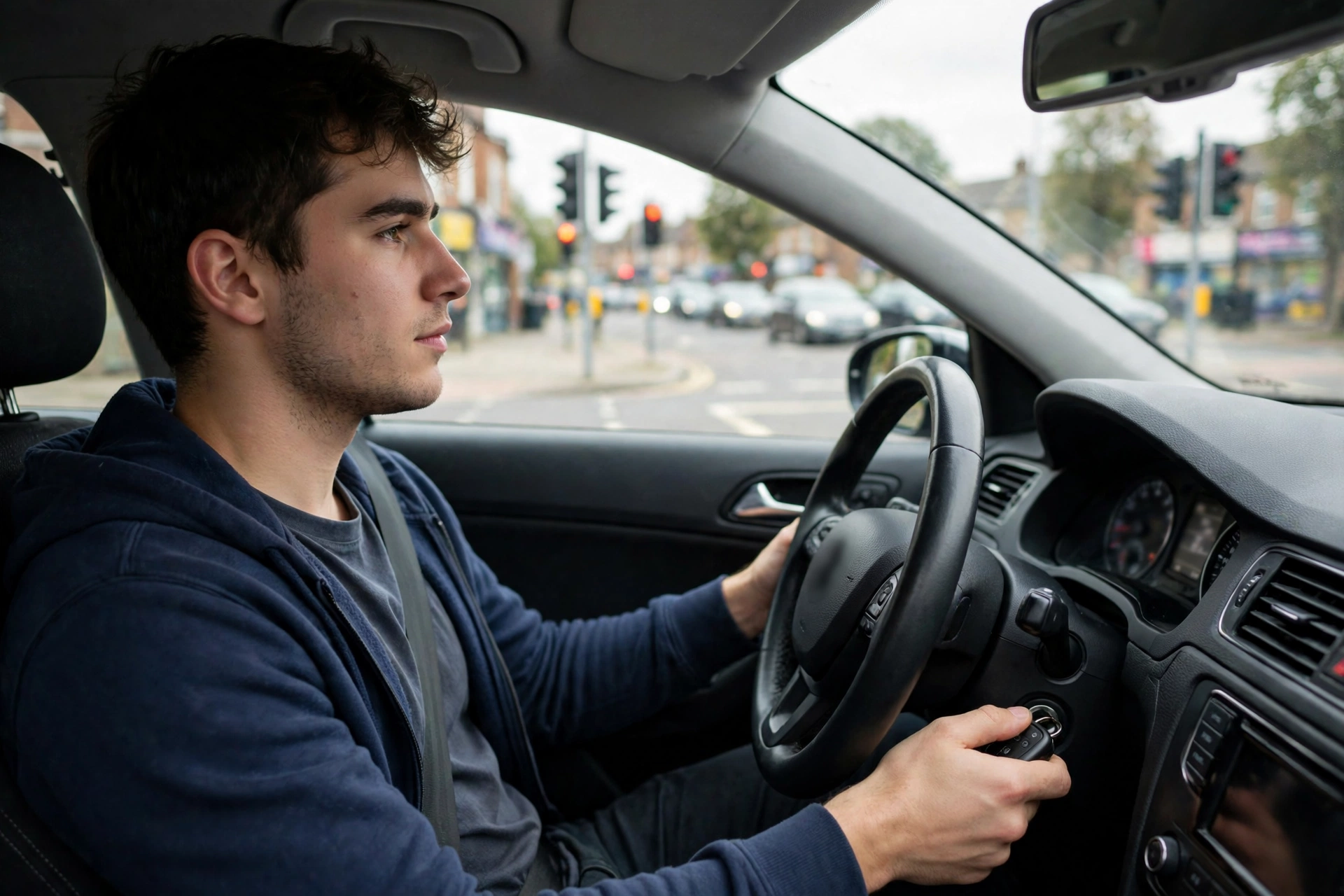
Stall once and stay calm — it is not an automatic fail. What matters is your recovery.
The myth: Stall once and the test is over.
The truth: The DVSA has debunked this one directly. Whether a stall matters, the agency says, all depends on the situation and how often you stall. You will fail if you stall and roll back a considerable distance, or if you stall repeatedly. But if you stall just once and keep control of the vehicle, you will not automatically fail.
What the examiner is really watching is your recovery. Stay calm, restart the engine, check your surroundings, and move off safely — and a single stall is usually marked as a minor driving fault, or sometimes not even that. The learners who fail on a stall are the ones who panic: stalling again and again, rolling backwards at a busy junction, or pulling away without looking. It is the reaction, not the stall.
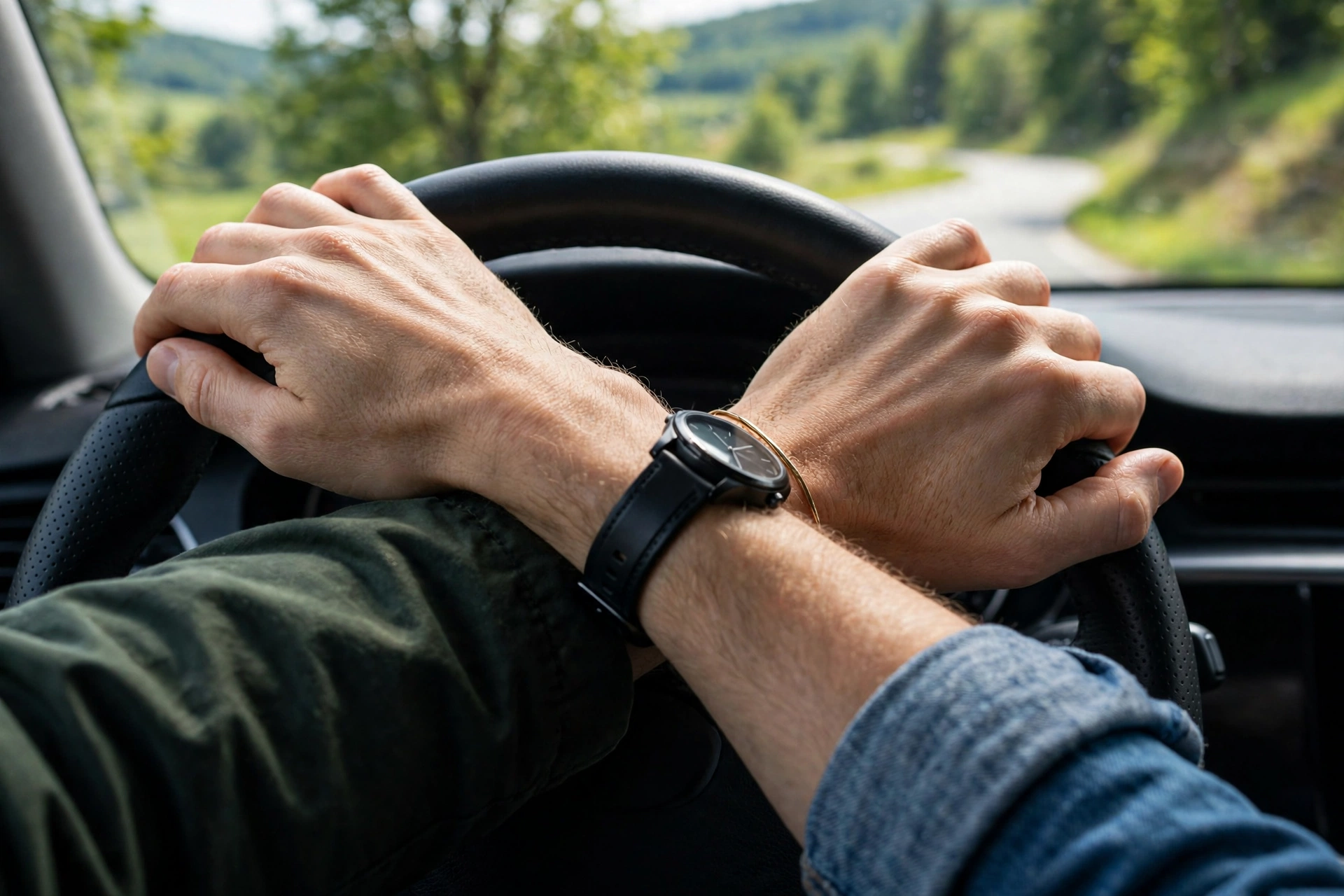
Crossing your hands is not a fault — the examiner judges smooth, safe, controlled steering.
The myth: If your hands cross on the steering wheel while turning, it is an automatic fail.
The truth: The DVSA has addressed this too. The examiner assesses whether your steering is smooth, safe and under control. They will not mark a fault just because you crossed your hands when turning the steering wheel.
There is no rule in the Highway Code or the DVSA marking scheme that requires a specific hand position. Pull-push steering is taught because it is tidy and controlled, but crossing your hands on a tight turn is natural, common, and completely fine as long as the car goes where it should. What fails you is losing control — not hand placement.

Examiners have no pass quotas — every test is assessed on its own merits.
The myth: Early morning tests are easier. Or late afternoon. Or midweek. Or never on a Friday.
The truth: The DVSA’s answer is blunt: if you are properly prepared, it does not matter what time of day you take the test. The standard is the same at 8:10 in the morning and at 3:40 in the afternoon. The examiner marks the same faults, on the same sheet, against the same criteria.
What does change with time of day is the traffic — rush hour is busier, school-run roads are different. But busy traffic is not harder marking. In fact, many learners drive better in busy traffic because it forces them to concentrate. Book the time that suits you, and prepare properly. That is the only variable that matters.
The myth: Take one wrong turn and the test is over.
The truth: We covered this in detail in our wrong-way guide, but it belongs here too because it is one of the most believed myths of all. GOV.UK states it plainly: the examiner will not give you a fault for taking a wrong turning. They will help you get back on the route.
The test assesses your driving, not your navigation. A wrong turn changes your route, not your score. What can cost you is the panic that follows — harsh braking, sudden lane changes, illegal corrections. Stay calm, keep driving safely, and the test continues as normal.
The myth: Drive well below the speed limit and the examiner will think you are a safe, careful driver.
The truth: The opposite. Driving consistently and significantly below the speed limit without good reason is a testable fault called undue hesitation. It frustrates other road users, creates dangerous overtaking situations, and tells the examiner you cannot judge appropriate speed.
Safe driving means driving at the right speed for the road and conditions — not the slowest speed you can get away with. The limit is a maximum, not a target, but crawling along a clear 30 mph road at 15 mph is not careful. It is a fault.
The myth: Brush the kerb during a manoeuvre and you have failed.
The truth: In a 2025 survey for the AA, 56% of drivers believed this. It is not true. A light touch of the kerb during a manoeuvre is judged on context, like everything else. Mounting the kerb dangerously, or hitting it hard enough to endanger pedestrians, is a different matter — but a gentle brush while parking is not an automatic fail.
The pattern across every myth in this guide is the same: the DVSA marks what is dangerous, not what is imperfect.
The myth: The examiner can see your previous failures, has already decided, and is trying to catch you out.
The truth: The examiner knows nothing about you except your name and your DVLA number. They do not know how many times you have taken the test, who your instructor is, or what happened last time. Every test is assessed on its own merits, from a blank sheet.
And no, the examiner is not trying to trick you. They give clear directions, repeat them if you ask, and help you back on route if you go wrong. Their job is to assess safe driving — not to set traps.
Strip away the myths and the marking is simple. There are three kinds of fault:
That is the entire system. No quotas, no secret rules, no automatic fails for single mistakes. Just safe driving, judged fairly.
No. There are no pass or fail quotas. Every test is assessed on its own merits against the same national standard.
Almost certainly not. One stall, recovered calmly and safely, is typically a minor fault at most. Repeated stalling, or stalling that creates danger, is what fails tests.
No. The examiner assesses whether your steering is smooth, safe and under control — not your hand position.
No. The DVSA says that if you are properly prepared, the time of day does not matter. The marking standard is identical.
Yes. Asking for confirmation is not a fault. It is always better than guessing and going wrong.
More questions? Read our frequently asked questions page.
Every myth in this guide has the same effect: it makes learners drive worse. It makes them slow down unnecessarily, panic over a single stall, or give up after a wrong turn. The truth is simpler and kinder than the myths. Drive safely, recover calmly from mistakes, and let the examiner mark what actually matters.
Shah Driving School teaches manual and automatic lessons across Bolton, Horwich, Atherton and Farnworth, with test-day preparation that replaces myths with facts. Book your lessons today — or consider an intensive driving course if your test date is close. And before test day, read our eyesight check guide too.
WhatsApp us