If you have a practical driving test booked at Weston Street, Bolton, and you are searching for the specific test routes your examiner will use, you are in exactly the right place. Shah Driving School is based in Great Lever BL3 — the same postcode as the test centre itself — and our instructors have driven every significant road on the Weston Street route network hundreds of times with learners. This guide gives you the most detailed, locally specific breakdown of Weston Street Bolton test routes available anywhere — every road, every key junction, every examiner assessment point, and every preparation tip that consistently produces first-time passes.
Weston Street test centre currently holds a pass rate of approximately 56.7% — well above the UK national average of 48.7%. That advantage is real and available to every well-prepared candidate. This guide tells you exactly what well-prepared means at this specific test centre.
Weston Street Test Centre — Essential Pre-Test Information
Address: Weston Street, Great Lever, Bolton, Greater Manchester, BL3 2AW
Nearest landmark: The test centre sits adjacent to a First Bus depot and is located immediately off the A666 St Peter’s Way — Bolton’s main dual carriageway. The Makkah Mosque and Community Centre is nearby. The centre is approximately five minutes from Bolton town centre by car.
Arrival: Plan to arrive at least 10 to 15 minutes before your test time. There is limited parking directly at the centre — your instructor will advise on the safest drop-off approach. Do not arrive in the tuition vehicle and immediately pull into the test centre car park — follow your instructor’s specific advice on the approach.
What to bring:
- Your valid provisional driving licence photocard
- Your theory test pass certificate number (you will need to quote it at reception)
- Your test booking confirmation reference
Test format at Weston Street:
- Eyesight check — reading a number plate at the required distance
- Show Me Tell Me vehicle safety questions — one Show Me (demonstrated while driving) and one Tell Me (answered before moving off)
- Approximately 40 minutes of driving on the routes detailed below
- One manoeuvre — drawn from parallel parking, bay parking (forward or reverse), or pulling up on the right
- Possible emergency stop
- Independent driving section — typically 20 minutes following either road signs or sat-nav directions
🔗 GOV.UK — What Happens During Your DVSA Practical Driving Test
The Most Common Failure Reasons at Weston Street — Know Them Before Your Test
Before detailing the specific routes, understanding why candidates fail at Weston Street is the most valuable preparation framework available. The DVSA publishes national fault data annually, and Shah Driving School’s local experience at this specific centre confirms the following as the most frequently recorded serious and dangerous faults:
Observation at junctions — the single most common failure reason nationally and at Weston Street specifically. Failing to look sufficiently before emerging, not checking both directions, or emerging when traffic is too close. The residential side roads of Great Lever and Daubhill generate the majority of these faults.
Lane discipline and positioning — particularly on the A666 St Peter’s Way dual carriageway and the multi-lane roundabout approaches. Drifting between lanes, late lane selection, and failing to follow road markings consistently.
Mirrors — signal — manoeuvre (MSM) routine — incomplete or poorly timed mirror checks before changing speed or direction. Examiners at Weston Street assess this continuously, not just at obvious points.
Reverse manoeuvres — control and observation during bay parking and parallel parking. Insufficient all-round observation, particularly for pedestrians and cyclists approaching from behind.
Speed — inappropriate for conditions — both excessive speed on residential routes and unnecessarily slow speed on faster sections like the A666 creating hazards for following traffic.
Every section of this guide addresses how to eliminate these specific faults on the specific roads where they occur.
Weston Street Bolton Test Routes — Detailed Road-by-Road Breakdown
Weston Street examiners draw from a network of routes covering the roads to the north, south, east, and west of the test centre. No two tests follow an identical route — but every test draws from the same pool of roads and junctions. Master every road in this guide and no combination your examiner chooses will feel unfamiliar.
The A666 St Peter’s Way — Dual Carriageway Section
Why it appears on test routes: The A666 runs directly alongside the test centre. You will almost certainly drive on it — either joining from a side road, travelling along it, or both.
What examiners assess here:
- Joining from slip roads — smooth acceleration to match carriageway traffic speed before merging. Hesitating at the merge point and forcing vehicles behind to brake is a serious fault
- Lane discipline — remaining in the left lane unless overtaking. Drifting right or sitting in the right lane unnecessarily generates lane discipline faults
- Speed management — the A666 has a 50mph limit on sections near the test centre. Speed creeping above this on downhill stretches is a consistently recorded fault. Be aware of the limit before you arrive at the road
- Exit judgment — identifying and taking the correct exit without late lane changes or missing the junction
Shah Driving School preparation tip: In automatic training, joining the A666 is significantly more manageable — full acceleration without gear changes allows complete focus on the merge timing. In manual, practise the gear change sequence for dual carriageway joining specifically — third to fourth to fifth smoothly as speed builds on the slip road.
Bradford Road — High-Observation Urban Driving
Why it appears on test routes: Bradford Road is one of Great Lever’s busiest arterial roads and a staple of Weston Street test routes in multiple directions from the centre.
What examiners assess here:
- Bus stop management — positioning correctly when a bus is stopped, anticipating passengers stepping out, and not cutting in dangerously as the bus pulls away
- Pedestrian crossing responses — identifying Pelican, Puffin, and Zebra crossings early and responding smoothly before reaching them
- Junction approaches — multiple side roads join Bradford Road, requiring continuous mirror checks and correct signalling when turning
- Cyclist awareness — Bradford Road carries consistent cycle traffic. Examiners assess overtaking clearance distance and whether candidates check mirrors and blind spots before passing
Shah Driving School preparation tip: Bradford Road is not a difficult road — it is a busy one. The candidates who fail here are those who become comfortable with the road’s flow and reduce their observation frequency. Keep mirror checks continuous throughout Bradford Road, not just at obvious hazard points.
Lever Edge Lane — Residential Observation Test
Why it appears on test routes: Lever Edge Lane and the network of residential streets surrounding the test centre form a significant portion of many Weston Street routes.
What examiners assess here:
- Emerging from side roads — the residential network includes numerous junctions where visibility is restricted by parked vehicles. The Peep and Creep technique is assessed here — inching forward slowly to gain sightlines, not guessing
- Meeting oncoming traffic — narrow stretches with parked vehicles either side require confident prioritisation decisions and correct positioning
- Speed in residential areas — 20mph zones exist throughout the Great Lever residential network. Failing to recognise zone entry signs and reduce speed promptly is a common minor fault that accumulates
Shah Driving School preparation tip: The most important principle on residential streets is never assuming — always confirming. A side road that looks clear from 20 metres might have a vehicle approaching from the left at 30mph. Inch forward, look, confirm, then go. Every time. No exceptions.
Bury Road — Northbound Routes from the Test Centre
Why it appears on test routes: Bury Road connects Great Lever northward toward Breightmet and Tonge Moor — a frequently used direction from Weston Street.
What examiners assess here:
- Speed limit transitions — Bury Road passes through sections with different speed limits. Identifying the transition signs early and adjusting smoothly is assessed throughout
- Roundabout approaches — junctions feeding onto and off Bury Road include roundabout-controlled intersections requiring early lane selection and clear signalling
- Independent driving — Bury Road sections frequently appear during the independent driving phase of the test, requiring candidates to follow road signs or sat-nav directions without examiner instruction
Shah Driving School preparation tip: For the independent driving section on Bury Road, focus on reading junction signage well in advance — not reacting to signs as you pass them. The examiner will not penalise a legal U-turn if you miss a direction, but they will penalise a dangerous manoeuvre made in panic because you spotted the sign too late.
Tonge Moor Road — Mixed Traffic and Observation
Why it appears on test routes: Tonge Moor Road extends the test route network east from Great Lever and appears on many Weston Street routes.
What examiners assess here:
- Consistent mirror use — Tonge Moor Road has a continuous flow of following traffic. Regular mirror checks before any speed change, position change, or signalling decision are essential
- Pedestrian priority at crossings — several crossing points along Tonge Moor Road require early identification and smooth stopping responses
- Junction priority decisions — the road network around Tonge Moor includes T-junctions and crossroads requiring confident priority decisions based on road markings
Daubhill and the Western Residential Network
Why it appears on test routes: The residential streets of Daubhill to the west of the test centre form another significant route direction from Weston Street.
What examiners assess here:
- School zone awareness — the Daubhill area includes school-proximity roads where reduced speed limits, lollipop crossings, and child pedestrian hazards require heightened awareness
- One-way street awareness — some Daubhill streets include directional restrictions. Following road signs accurately during independent driving sections is particularly important here
- Parked vehicle hazards — dense residential parking creates consistent hazard assessment demands throughout this route direction
Bolton Town Centre Approaches — Trinity Street and Beyond
Why it appears on test routes: Some Weston Street routes extend into Bolton town centre approaches, incorporating the busier junctions around Trinity Street.
What examiners assess here:
- Multi-lane roundabout discipline — Trinity Street and the surrounding town centre junctions include multi-lane roundabouts where early lane selection, correct signalling, and confident lane-holding are non-negotiable
- Bus lane compliance — Bolton town centre has designated bus lanes with operational hours. Entering a bus lane during operational hours is a serious fault
- Traffic light observation — the town centre approach roads include phased traffic light junctions where anticipating phase changes and responding smoothly demonstrates confident road awareness
Wigan Road Bolton — Westbound Routes
Why it appears on test routes: Wigan Road extends test routes westward from the test centre area toward Deane and beyond.
What examiners assess here:
- Speed management on a wider road — Wigan Road’s wider carriageway encourages speed drift above the limit. Active speed awareness is essential
- Junction discipline — several significant junctions appear along the Wigan Road westbound route, each requiring complete MSM routine execution
- Pedestrian crossings — the Wigan Road corridor includes a series of crossing points that examiners use to assess observation quality and braking smoothness
The Manoeuvres — What to Expect at Weston Street
Your examiner will ask you to perform one manoeuvre during your test. The three options are:
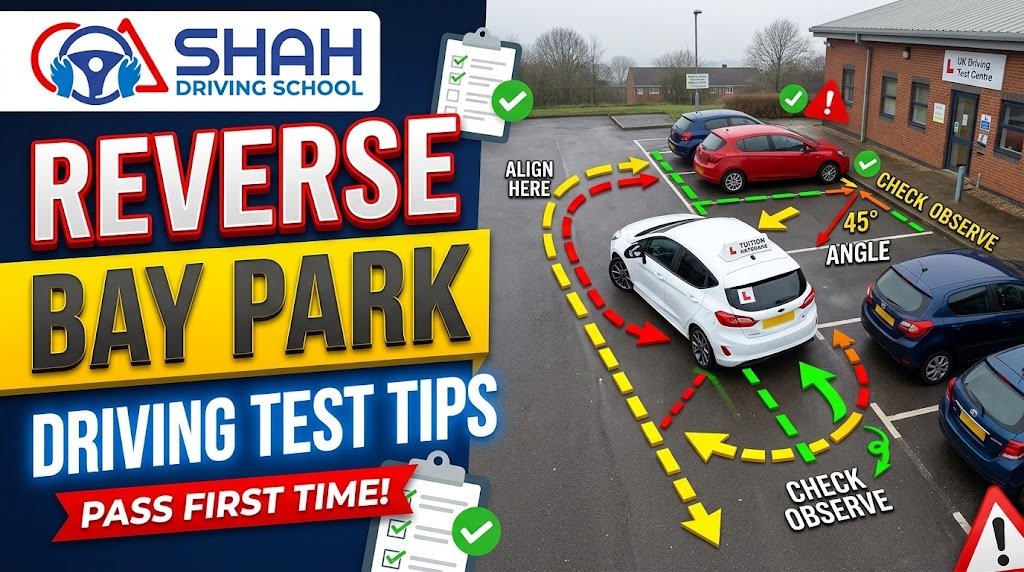
Bay parking (forward or reverse into a bay) — most commonly conducted in the test centre car park itself on return from the road test. You will be asked to park in a bay, then pull forward or reverse out as directed.
Parallel parking — conducted on a residential road, typically on the left side of the road alongside a parked vehicle.
Pulling up on the right — parking on the right side of the road, reversing back two car lengths, and rejoining traffic. Introduced to the test in 2017 to reflect real-world driving behaviour.
Emergency stop — not a manoeuvre in the formal sense, but included in approximately one in three tests. The examiner will raise their hand and say “stop” — you must brake firmly, under control, as quickly as possible.
Shah Driving School preparation tip: All four scenarios are practised in Shah Driving School lessons on the specific roads and car park where they occur at Weston Street. By your test, none feels unfamiliar.
How Shah Driving School Prepares You for Every Weston Street Route
Every Shah Driving School lesson programme for Bolton learners incorporates the specific Weston Street route roads from early in the training. We do not save test route driving for the final sessions. We build it into your programme from the moment your basic car control is established.
This means:
- You drive Bradford Road in lessons ten, fifteen, and twenty — not just in a final pre-test drive
- You practise A666 dual carriageway joining from the same slip roads your examiner will use
- You navigate the Lever Edge Lane residential network under instruction before you navigate it under examination
- You complete full mock tests — timed, structured, and conducted exactly as the DVSA format requires — on real Weston Street routes before your actual test day
The result is a candidate who arrives at the test centre already familiar with every road the examiner might choose. That familiarity is the most reliable predictor of first-time pass success — and it is what Shah Driving School’s 1,250-plus five-star reviews consistently describe.
Our intensive driving courses in Bolton are the fastest way to build this familiarity — daily sessions on real test routes, compressing weeks of preparation into a focused, efficient programme.
For a complete overview of our fast-track preparation approach, read our guide on how to pass fast with Shah Driving School.
🔗 GOV.UK — Driving Test Faults: What Counts as a Serious or Dangerous Fault
🔗 The Highway Code — Rules for Using the Road
Frequently Asked Questions: Weston Street Bolton Test Routes
1. Can I practise the exact Weston Street test routes before my test?
Yes — and you absolutely should. Shah Driving School’s lesson programmes include the real Weston Street test routes from early in your training. If you are preparing independently, the roads detailed in this guide are all public — driving them with a supervising driver in a private vehicle is completely legal and genuinely useful preparation. The difference is that Shah Driving School’s instructors know exactly which junctions examiners focus on and can point them out as you drive.
2. How long does a Weston Street driving test take?
The full test typically takes between 38 and 45 minutes of driving time, plus the pre-drive checks, eyesight test, and Show Me Tell Me questions at the start. Allow approximately one hour for the entire appointment from arrival to result.
3. What is the best time of day to take my test at Weston Street?
Mid-morning weekday slots — typically between 9:30 am and 11:30 am — generally offer lighter traffic conditions than early morning rush hour or late afternoon school-run periods. The Bradford Road and A666 sections in particular are significantly busier during peak commuter hours. If your examiner offers you a choice of slots and your available dates include mid-morning weekday options, these are generally preferable for less experienced candidates.
4. Will my examiner always use the A666?
Not necessarily — but the A666 appears on a significant proportion of Weston Street test routes given the test centre’s direct proximity to the road. You should be fully prepared for dual carriageway driving regardless of whether it appears on your specific route. Candidates who are not prepared for the A666 and encounter it unexpectedly are at serious risk of a serious fault through hesitation or incorrect lane discipline.
5. I failed at Weston Street recently. What is the most efficient way to prepare for a resit?
Request your full fault breakdown from your examiner’s debrief immediately after your test — examiners provide this verbally, and it appears on your result documentation. Bring this breakdown to your first post-fail lesson with Shah Driving School. We will structure every remaining preparation hour around the specific fault categories recorded — not generic revision. Most candidates who approach a second Weston Street attempt with targeted, fault-specific preparation pass comfortably. Call 0749 0662 777 to discuss a tailored re-sit programme.
Book Your Weston Street Preparation Today
No amount of reading about the Weston Street Bolton test routes substitutes for driving them — repeatedly, purposefully, and with an instructor who knows exactly what your examiner is looking for at every key point.
Shah Driving School is locally based in BL3, within walking distance of the test centre. Our instructors know these routes in the way that only daily, hands-on local teaching produces. Every Shah Driving School pupil who sits their test at Weston Street has already driven every significant road on the route network before their test day.
For our most efficient pre-test preparation option, our 15-hour automatic intensive course delivers 15 focused daily hours specifically structured around Weston Street test routes, concluding with a full mock test before your actual examination.
📞 Call or WhatsApp: 0749 0662 777
🌐 Book online: www.shahdrivingschool.uk
Have a test booked at Weston Street? Call Shah Driving School today — and make sure every road on your test route feels completely familiar before you sit down with an examiner.
All DVSA guidance is accurate as of June 2026. Weston Street test centre pass rate sourced from the current DVSA-published data. Shah Driving School is a DVSA-registered driving school serving Great Lever, Bolton, Halliwell, Deane, Farnworth, Westhoughton, Horwich, and the wider Greater Manchester area. All instructors hold current ADI certification.