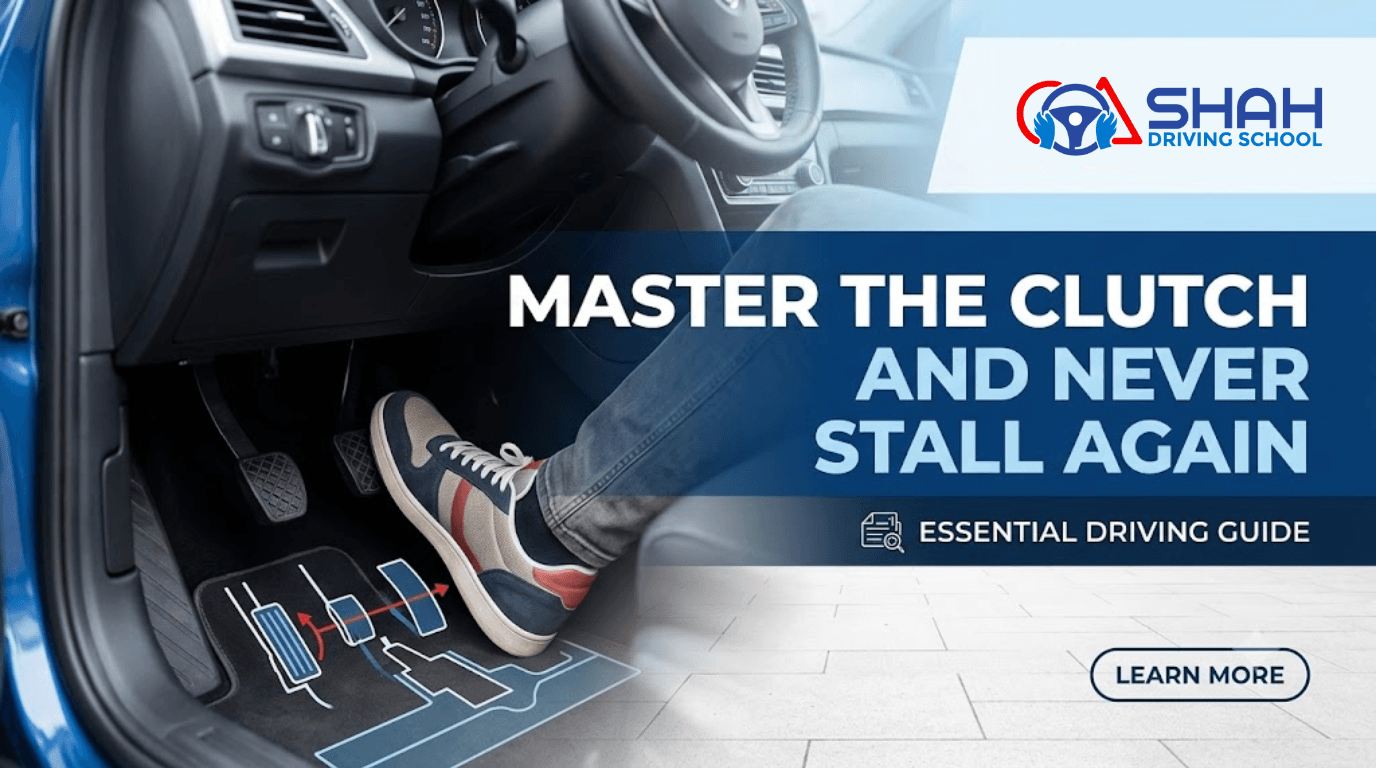
Clutch bite point training in Bolton is one of the most searched-for driving topics in the area — and it is easy to understand why. The clutch is the single most technically demanding aspect of learning to drive a manual car. Get it right and everything else follows smoothly. Get it wrong and you stall, roll back on hills, lurch through junctions, and accumulate the kind of minor faults that quietly push a test result into a fail.
Shah Driving School’s instructors have taught clutch control to hundreds of Bolton learners across BL1, BL2, BL3, and beyond — from complete beginners who have never touched a gearstick to experienced learners who passed their test years ago and need a confident refresher. This guide covers everything: what the bite point actually is, how to find it consistently, why learners stall and how to stop, and how to master hill starts on Bolton’s most demanding gradients.
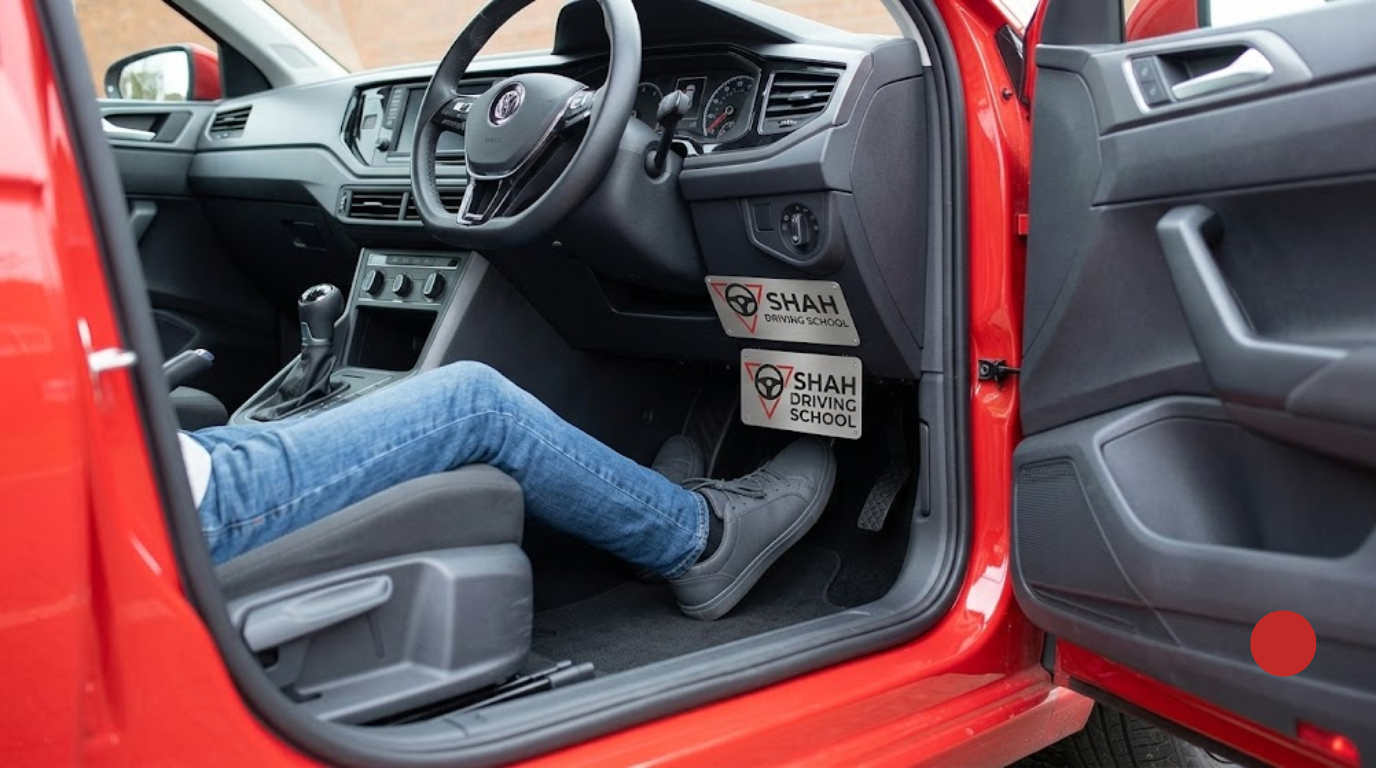
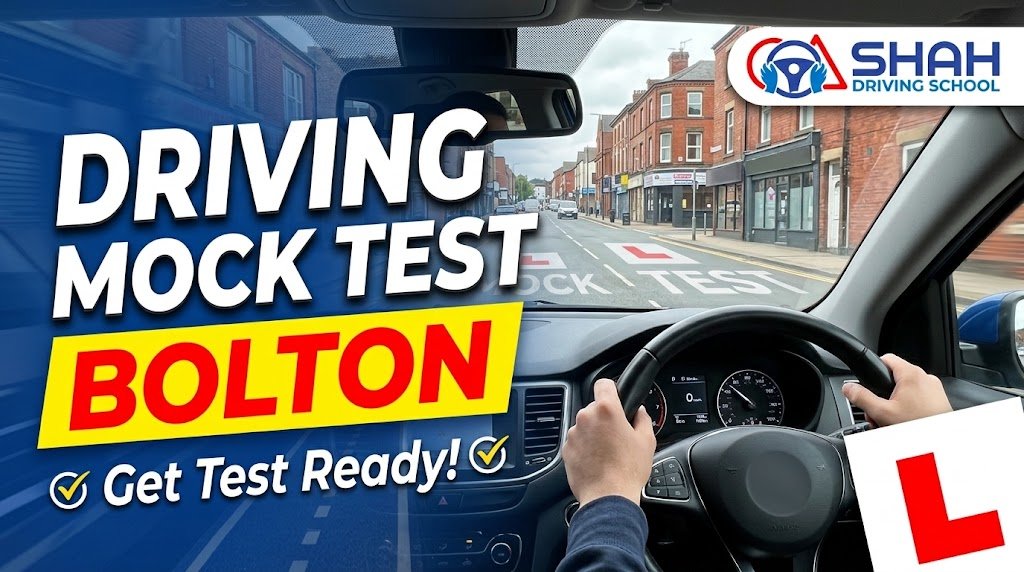
Ready for a lesson: A student driver, identifiable by the Shah Driving School signage in the footwell, prepares to learn with a clear view of the controls.
What Is the Clutch Bite Point — and Why Does It Matter So Much?
The clutch pedal connects and disconnects the engine from the gearbox. When you press it fully down, the engine and wheels are completely separated — the engine runs freely without driving the car. When you release it fully, the engine and wheels are fully connected — the engine drives the car directly.
The bite point is the precise position between those two extremes where the clutch plates begin to make contact. At the bite point, the engine starts to take the weight of the car — you will feel a slight pull, hear a subtle change in engine note, and notice the car gently trying to move forward. It is the moment when controlled movement becomes possible.
Finding the bite point consistently is the foundation of almost every manual driving skill:
- Moving off smoothly requires finding the bite point before releasing the handbrake
- Hill starts require holding the bite point precisely while managing the accelerator and handbrake simultaneously
- Slow-speed manoeuvres require controlling the car at the bite point for extended periods
- Junction approaches in queue traffic require returning to the bite point repeatedly as the queue moves
- Emergency stops require re-engaging the clutch at the bite point smoothly after stopping
Every single one of these situations appears on your practical driving test. Everything is easier when your bite point control is instinctive rather than conscious.
🔗 GOV.UK — Learning to Drive: What Your Lessons Should Cover
How to Find the Bite Point — Step by Step
This is the technique Shah Driving School’s Bolton instructors use with every manual learner from their very first lesson. Follow it precisely and you will find the bite point reliably every time.
Step 1 — Press the clutch fully to the floor
Your left foot presses the clutch pedal all the way down before you select any gear. Never attempt to find the bite point from a partially released position — always start from the bottom.
Step 2 — Select first gear
With the clutch fully down, move the gear lever cleanly into first gear. Confirm you are in the correct gear before proceeding.
Step 3 — Set the gas
Press the accelerator gently until the engine note rises slightly — a gentle hum rather than a roar. You are looking for approximately 1,500 to 2,000 RPM on the rev counter if your car has one. Do not set the gas after releasing the clutch. Set it before.
Step 4 — Raise the clutch slowly to the bite point
Bring the clutch pedal up slowly and smoothly — not in one swift movement. You are listening and feeling for the moment the engine note drops slightly and the car begins to strain forward against the handbrake. That dip in engine note and that forward pull is your bite point. Stop there.
Step 5 — Hold the bite point
Once found, hold the clutch completely still at this position. Do not raise it further. Do not lower it. This is the controlled position from which every smooth move-off begins.
Step 6 — Release the handbrake and move away
With the bite point held and gas set, release the handbrake smoothly. The car will begin moving forward. Bring the clutch up gradually as the car gains speed — not all at once.
Why Learners Stall — and the Exact Fix for Each Cause
Stalling is the most common clutch-related problem in manual driving lessons across Bolton — and it almost always has a specific, identifiable cause. Here are the most frequent reasons and their precise solutions.
Cause 1 — Raising the Clutch Too Quickly Through the Bite Point
This is the most common cause of stalling. The clutch passes through the bite point too fast — the engine engagement is too sudden — and the engine cannot cope with the sudden load. It cuts out.
The fix: Slow down your clutch release specifically in the final third of the pedal travel — the zone where the bite point lives. Think of three speed zones: fast from the floor to halfway, slower from halfway to the bite point, and then controlled and gradual from the bite point onwards as the car moves away.
Cause 2 — Not Enough Gas Set Before Moving
If the engine has no gas to work with when the clutch engages, it simply stalls under the load of moving the car.
The fix: Set the gas before you begin raising the clutch. This sequence — gas first, then clutch — is non-negotiable on a hill start and important even on flat ground. The engine needs fuel to do the work the clutch is about to ask of it.
Cause 3 — Releasing the Clutch on a Hill Without the Handbrake Holding the Car
On a gradient, releasing the clutch without the handbrake holding the car causes the car to roll back while the engine is trying to move it forward. The conflicting forces stall the engine.
The fix: Always use the handbrake on any uphill gradient — including very slight ones. Hold the bite point and gas, then release the handbrake cleanly once the car is straining forward. This is the hill start sequence covered in detail below.
Cause 4 — Panicking and Lifting the Clutch to the Floor
Some learners, when they feel the car beginning to stall, instinctively press the clutch down to the floor — which actually allows the stall to complete. Others lift the clutch further up, accelerating the stall.
The fix: If you feel the engine beginning to struggle, press the clutch down smoothly and completely. This separates the engine from the drivetrain and allows the engine to recover. Then restart the move-off sequence from the beginning.
Mastering Hill Starts on Bolton’s Steepest Roads
Hill starts are where clutch bite point control is most critically tested — and Bolton has no shortage of challenging gradients. The residential streets of Halliwell, the Chorley Old Road approaches, and the steeper sections around Astley Bridge and Harwood all feature inclines that demand confident, precise clutch control under real traffic pressure.
Here is Shah Driving School’s exact hill start sequence for Bolton’s gradients:
Step 1 — Stop safely and apply the handbrake
On any uphill incline, apply the handbrake firmly as soon as you stop. Never rely on the footbrake to hold you on a hill during a move-off sequence — you cannot set the gas properly with your foot on the brake.
Step 2 — Select first gear with clutch fully down
Clutch fully to the floor. First gear selected cleanly and confirmed.
Step 3 — Set more gas than you would on flat ground
Hill starts require more engine power than flat road starts. The steeper the gradient, the more gas you need. On a moderate incline, aim for a slightly higher engine note — the car needs more power to overcome the gradient.
Step 4 — Find and hold the bite point
Raise the clutch slowly to the bite point and hold it. On a hill, you will feel a more pronounced pull forward than on flat ground — the engine is working harder against the gradient. Hold the clutch completely still at this point.
Step 5 — Release the handbrake smoothly
Once you feel the car pulling forward against the handbrake, release the handbrake in one smooth action. The car will begin moving forward. If you feel it starting to roll back at any point, press the clutch slightly lower and reapply the handbrake before trying again.
Step 6 — Move away and raise the clutch gradually
As the car moves forward, bring the clutch up gradually while maintaining the gas. Do not rush this stage — smooth progression is more important than speed.
The most common hill start fault in Bolton driving tests is releasing the handbrake before the bite point is properly established — resulting in a brief roll back that constitutes a serious fault if any danger is created. Our instructors drill this sequence on real Bolton gradients until the handbrake-release timing becomes completely instinctive.
🔗 The Highway Code — Rule 228: Using the Handbrake on Hills
Slow-Speed Clutch Control — Manoeuvres and Queue Traffic
Beyond hill starts, clutch bite point control at slow speed is assessed in several other areas of your practical test.
Bay Parking and Parallel Parking
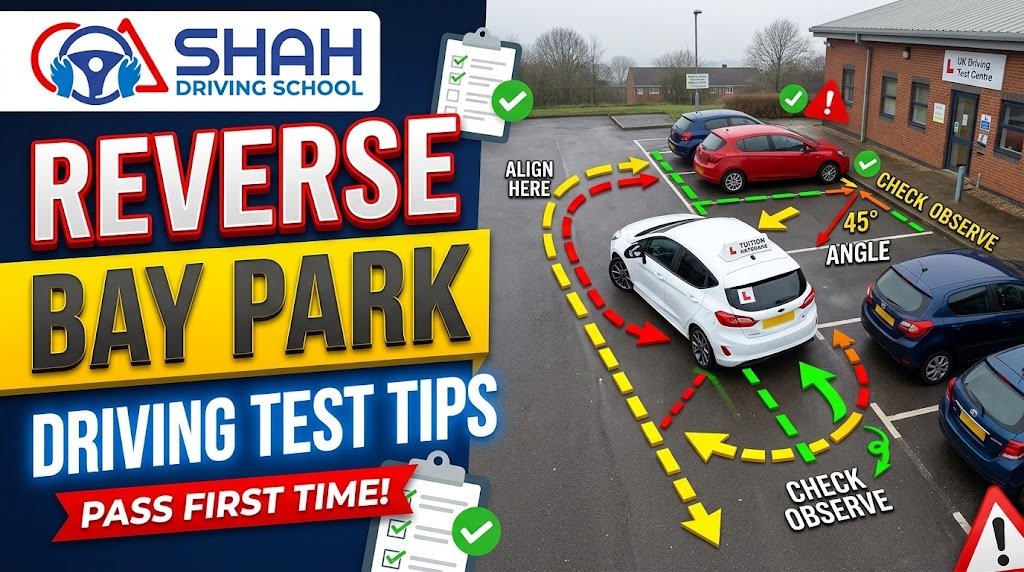
Both manoeuvres require moving the car at extremely low speed — often just a few inches at a time. This level of control is only achievable by holding the car precisely at or just above the bite point, using light gas, and feathering the clutch up and down in tiny movements to control pace.
Shah Driving School’s Bolton instructors teach this technique specifically — not just the geometry of parking manoeuvres, but the precise clutch control that makes slow-speed accuracy possible in a manual car.
Junction Queue Traffic
On busy Bolton junctions — particularly around the town centre, Bradford Road, and the approaches to Weston Street test centre — queue traffic moves in short bursts at very low speed. Managing the clutch consistently at the bite point through these conditions, without stalling between movements, is a skill that requires significant repetitive practice.
Our instructors use real Bolton junction queues in lessons specifically for this purpose — not quiet car parks. Real traffic creates real pressure, and real pressure is what your test will involve.
How Many Hours Does Clutch Control Mastery Take?
This is one of the most common questions Shah Driving School receives from Bolton manual learners — and the honest answer varies by individual.
Most learners achieve consistent basic bite point control within their first three to five hours of manual tuition. Reliable hill starts on moderate gradients typically take five to ten hours. Confident slow-speed clutch control for manoeuvres and queue traffic typically develops between hours ten and twenty.
The speed of progress depends significantly on lesson frequency. Learners taking intensive manual driving lessons in Bolton — daily back-to-back sessions — typically develop clutch competency significantly faster than those on weekly lesson programmes, because muscle memory builds during sleep and daily reinforcement prevents the regression that seven-day gaps cause.
For learners who want the fastest possible route to clutch mastery, our intensive driving courses in Bolton deliver daily manual tuition structured specifically around building clutch control as a foundation before introducing more complex road skills.
🔗 GOV.UK — Driving Test: What Your Examiner Assesses
When to Consider Switching to Automatic
For some Bolton learners, clutch bite point training reveals that the manual gearbox is a genuine barrier to progress — not a temporary difficulty that will resolve with practice, but a fundamental mismatch between the learning style and the vehicle type.
If you have had ten or more hours of manual tuition and still stall regularly on flat ground, struggle consistently with hill starts on moderate gradients, or find that clutch management absorbs so much attention that your road observations suffer significantly — it is worth seriously considering switching to automatic training.
An automatic licence is not a lesser achievement. It is a full UK driving licence that covers all automatic vehicles for life. For learners in Bolton whose primary goal is gaining independence and mobility, an automatic pass achieved efficiently is worth considerably more than an indefinitely delayed manual pass.
Our 15 hours automatic intensive course is specifically designed for learners who have struggled with manual and want a structured, efficient route to qualification in an automatic vehicle. Many of our most positive Bolton reviews come from exactly this group of learners.
For a full breakdown of whether manual or automatic suits your specific profile, read our detailed fast-track guide on how to pass fast with Shah Driving School.
Frequently Asked Questions: Clutch Bite Point Training Bolton
1. How do I know when I have found the bite point?
You will feel two simultaneous signals: a slight forward pull as the engine takes the car’s weight, and a subtle drop in engine note as the engine begins working against the drivetrain load. Some cars also produce a very slight vibration through the clutch pedal at the bite point. With practice, you will recognise all three signals instantly — but the forward pull is the most reliable indicator for most learners.
2. Why does the bite point feel different in different cars?
Every car’s clutch is calibrated slightly differently — the bite point position on the pedal travel varies between vehicle makes, models, and individual wear levels. This is why learning in a single consistent tuition vehicle is important during your training. Shah Driving School’s well-maintained fleet ensures the bite point behaves predictably in every lesson — and your instructor will always brief you on any subtle differences before you drive.
3. I keep stalling on hill starts specifically. What am I doing wrong?
The most common cause of hill-start-specific stalling is releasing the handbrake before the bite point is properly established. If the car rolls back even slightly before your clutch engages the engine, the conflicting forces stall the engine. Hold the bite point — feel the car pulling forward against the handbrake — then release the handbrake. Not before. This sequence, practised on real Bolton gradients in lessons, solves the issue for the vast majority of learners.
4. Will the examiner fail me for stalling once on my driving test?
A single stall — particularly if you remain calm, restart correctly, and move away safely without causing any hazard — will typically be recorded as a minor fault rather than an automatic fail. Multiple stalls, or a stall that causes a hazard or requires other road users to react, can be recorded as a serious fault. The best approach is to practise until stalling is genuinely rare before booking your test — not to manage the risk of stalling during it.
5. How is clutch control assessed on the Bolton driving test?
Examiners at Weston Street assess clutch control throughout the entire test — not just during specific manoeuvres. Every move-off, every junction approach in queue traffic, every hill start, and every slow-speed manoeuvre involves the clutch. Consistent, smooth clutch control throughout demonstrates genuine competency. Jerky, hesitant, or stall-prone clutch use accumulates minor faults across multiple assessment areas simultaneously.
Book Your Manual Driving Lessons in Bolton Today
Clutch bite point control is a learnable skill — every single learner who sits in Shah Driving School’s manual tuition car starts from the same place and builds the same competency through the same structured, patient instruction. The difference between learners who master it quickly and those who struggle is almost always the quality of the instruction and the frequency of their practice.
Shah Driving School’s DVSA-approved Bolton instructors deliver clutch bite point training on real local roads — Bolton gradients, real junction queues, and the actual conditions your examiner will assess you in. Female instructors available. Bilingual instruction in Urdu and Punjabi available. Intensive and weekly programmes both available.
📞 Call or WhatsApp: 0749 0662 777
🌐 Book online: www.shahdrivingschool.uk
Ready to master the clutch and earn your full manual licence in Bolton? Call Shah Driving School today — and let’s get you properly sorted from bite point to pass certificate.
All DVSA guidance is accurate as of June 2026. Shah Driving School is a DVSA-registered driving school serving Bolton, Halliwell, Deane, Great Lever, Farnworth, Westhoughton, Horwich, Leigh, Atherton, Tyldesley, and the wider Greater Manchester area. All instructors hold current ADI certification.